Dal brevetto di Carl Benz al presente: 140 anni di mobilità raccontati attraverso uomini, macchine e strade
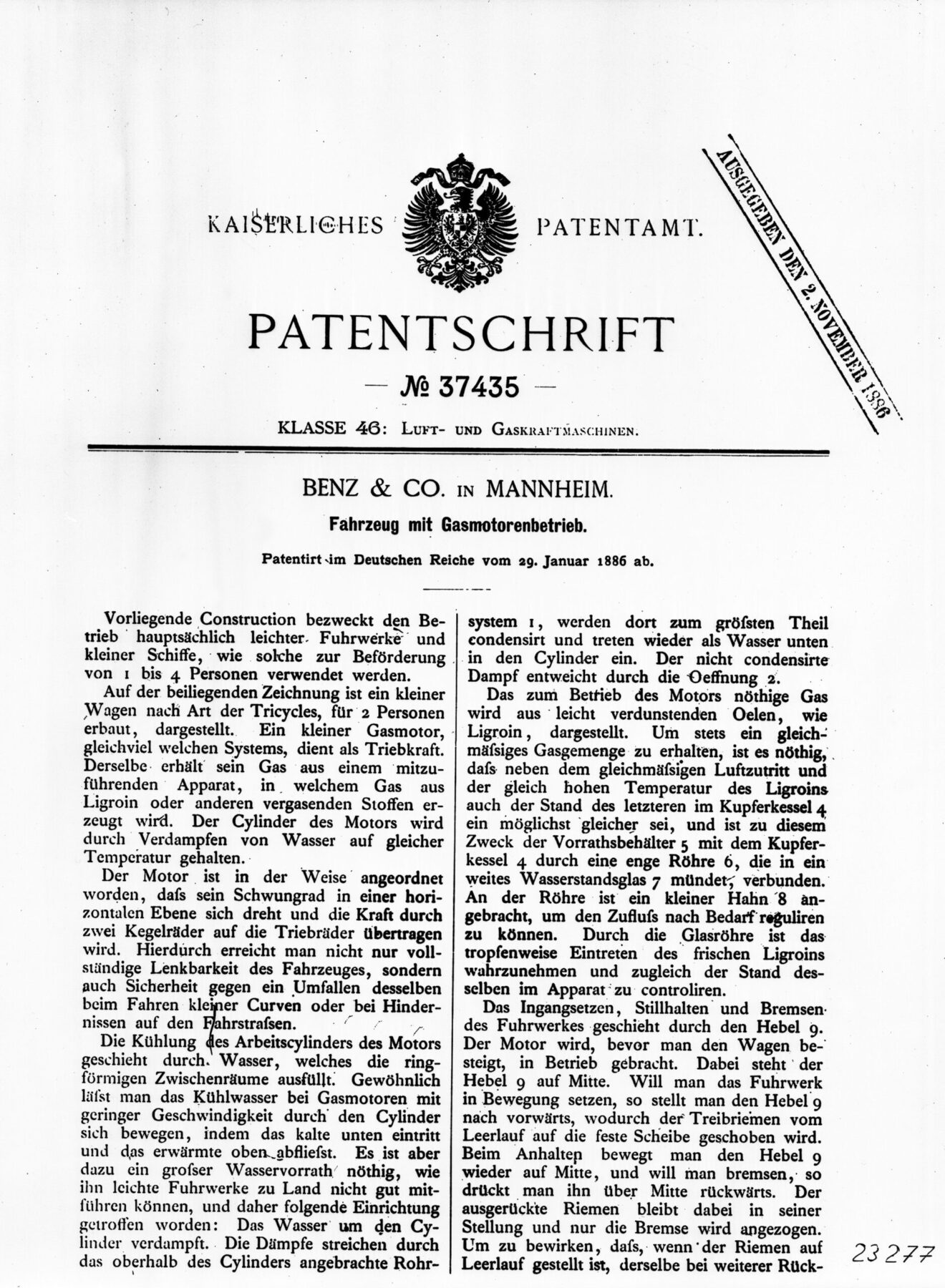
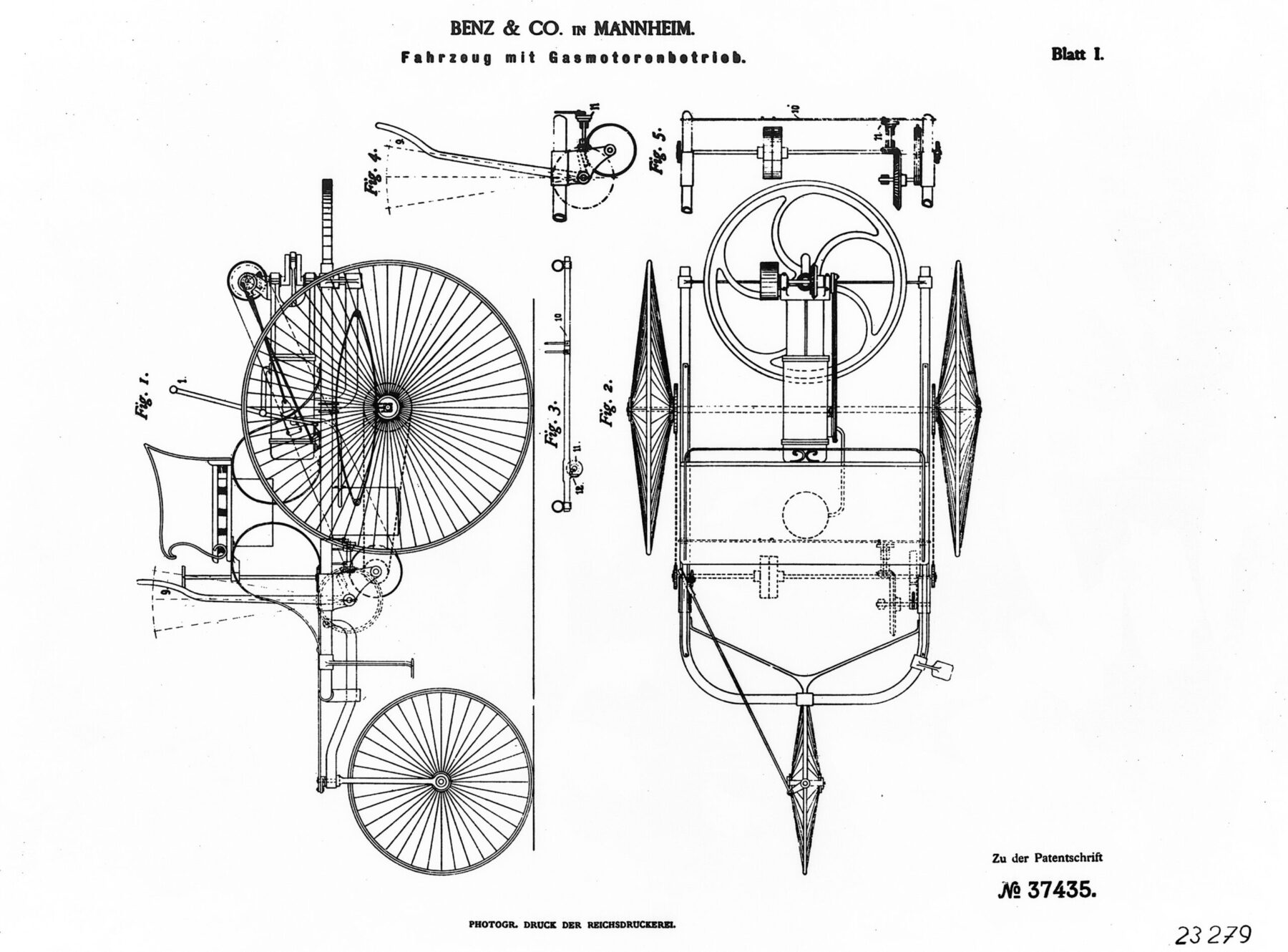
Il 29 gennaio 1886 viene depositato in Germania il brevetto DRP 37435 per un “veicolo con motore a gas”. È l’atto formale che segna la nascita dell’automobile. A 140 anni di distanza, quell’invenzione continua a generare conseguenze tecniche, sociali e culturali che attraversano il tempo fino al 2026.
1886: un brevetto, due città, una nuova idea di movimento
Il documento è breve, tecnico, essenziale. Porta la firma di Carl Benz ed è registrato a Mannheim il 29 gennaio 1886. Descrive un veicolo a tre ruote spinto da un motore a combustione interna. Non è una carrozza migliorata, non è un esperimento: è un sistema nuovo, completo, pensato per muoversi senza cavalli.
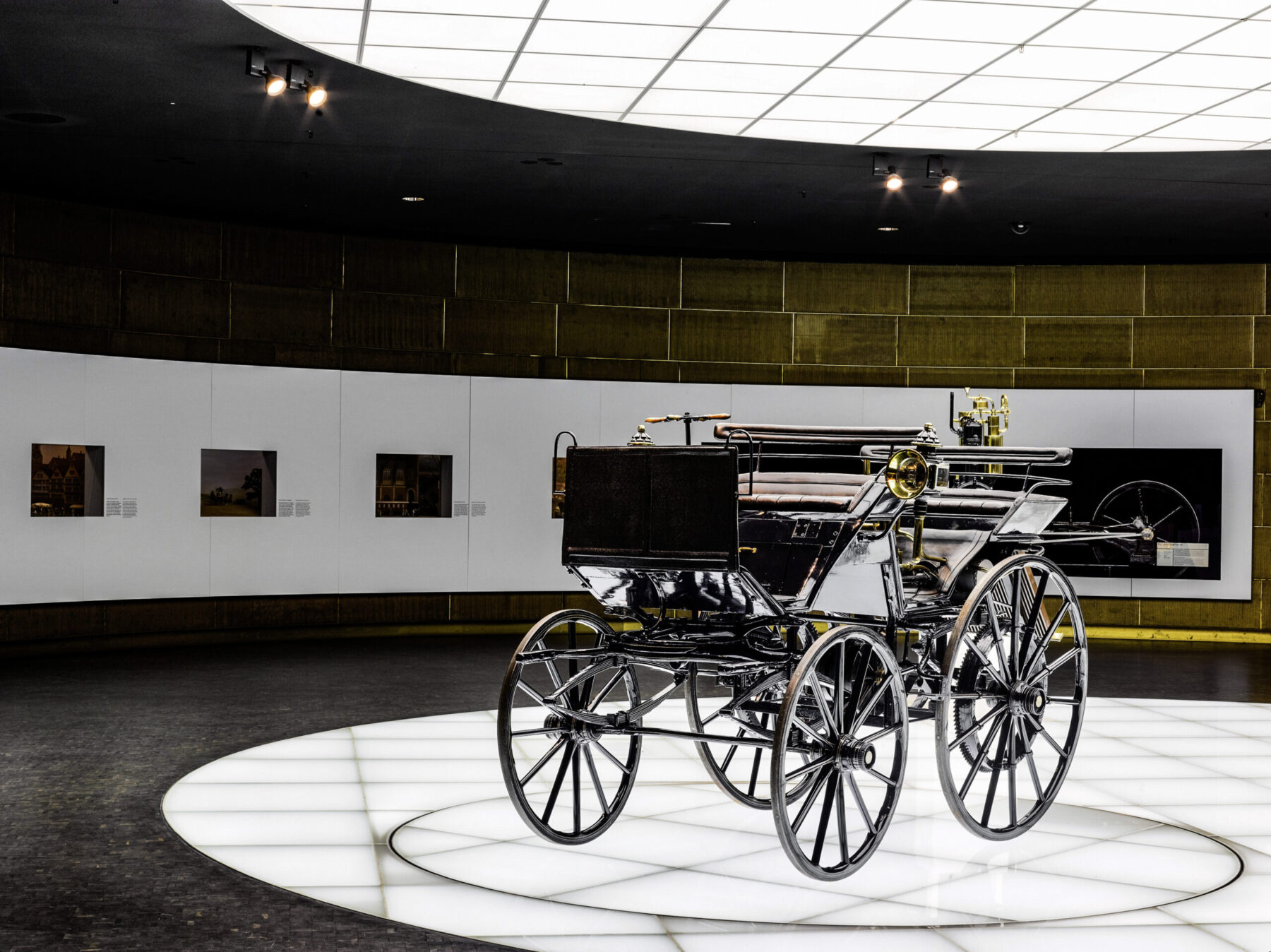
Nello stesso anno, a circa 130 chilometri di distanza, Gottlieb Daimler e Wilhelm Maybach montano un motore ad alta velocità su una carrozza a quattro ruote. I due percorsi non si incontrano, ma procedono in parallelo. È una coincidenza storica che racconta un’epoca pronta al cambiamento: la fine del XIX secolo, attraversata da elettricità, meccanica, industria.
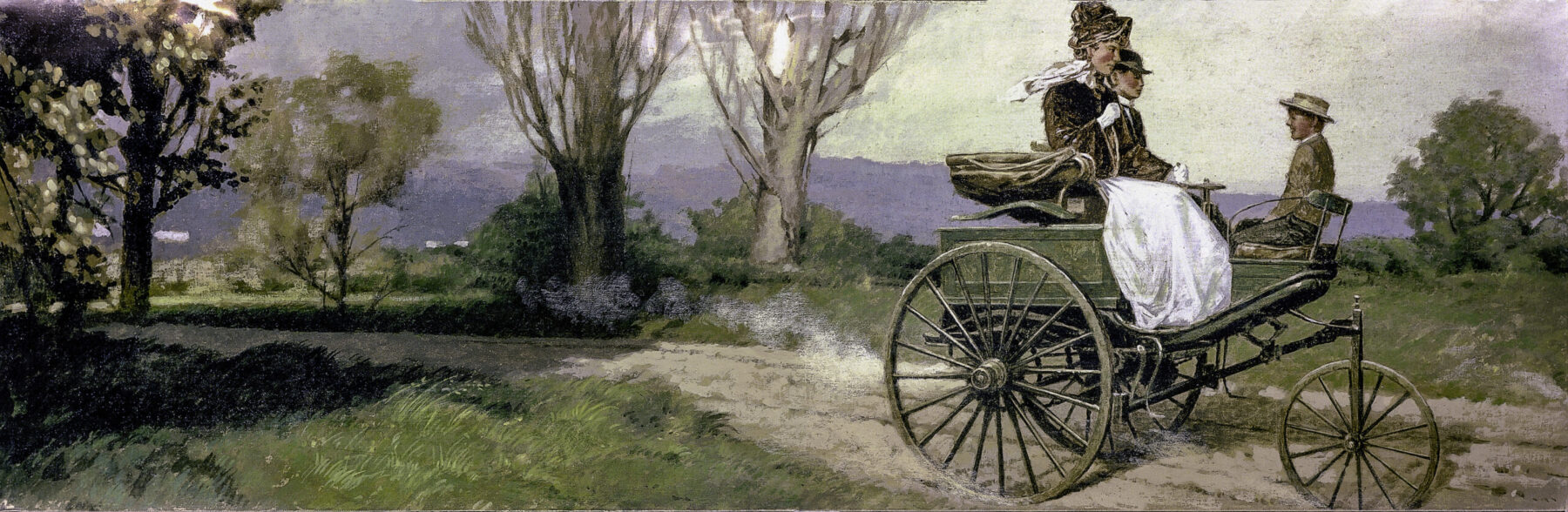
Nel 1888, Bertha Benz percorre circa 106 chilometri tra Mannheim e Pforzheim. È il primo viaggio automobilistico a lunga distanza della storia. Non è una dimostrazione ufficiale, ma una prova di realtà: rifornimenti improvvisati, riparazioni sul ciglio della strada, ostacoli concreti. L’automobile esce dal laboratorio e incontra il mondo.
Dal Novecento alla strada moderna
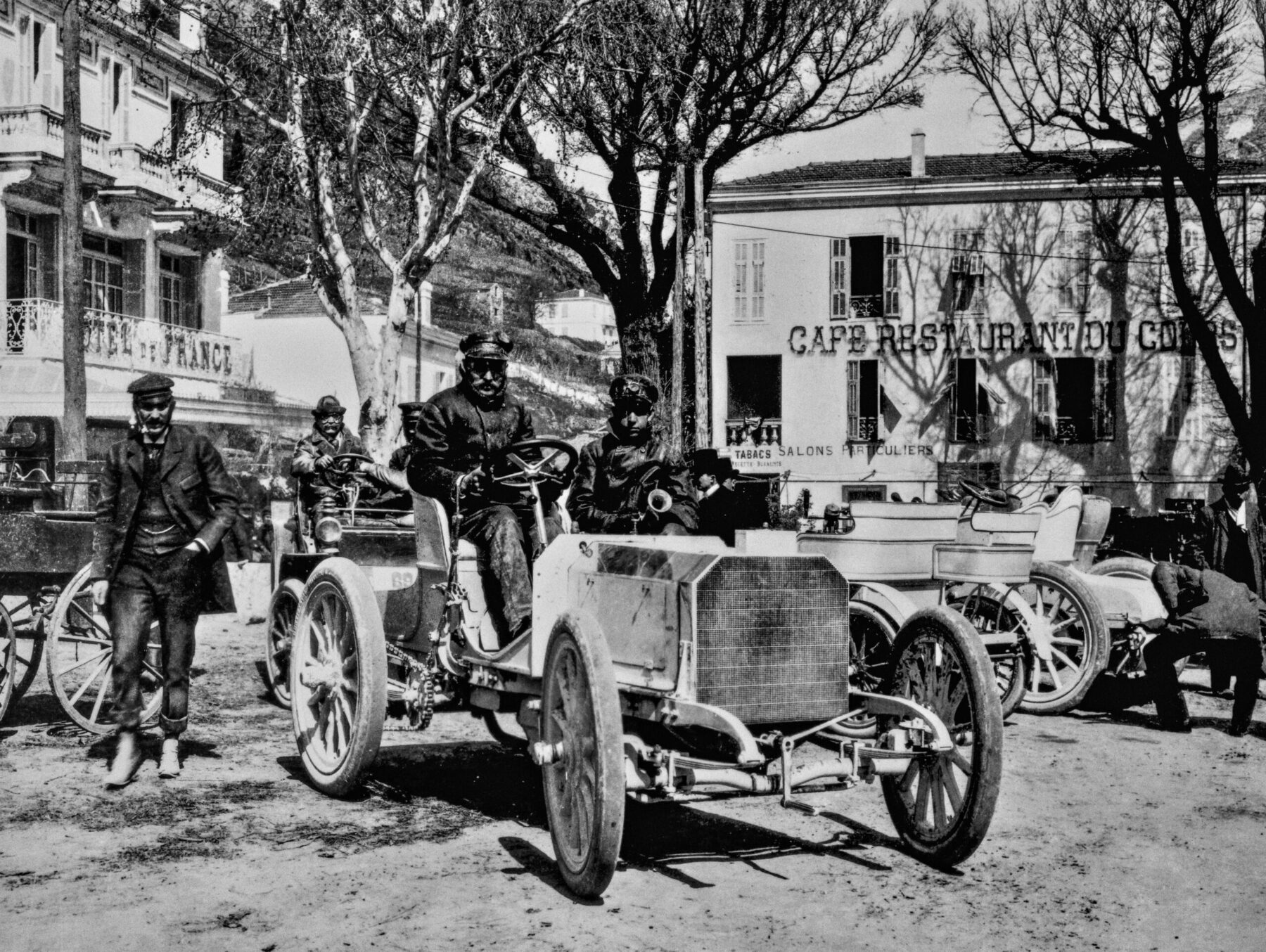
Nel 1900 arriva la Mercedes 35 hp. Passo lungo, carreggiata ampia, baricentro basso. Per la prima volta l’automobile non assomiglia più a una carrozza motorizzata. È un oggetto progettato per andare veloce, per stare in strada, per essere controllato. Quel modello apre una sequenza che attraversa tutto il Novecento.
Nel 1926 nasce ufficialmente Mercedes-Benz, dalla fusione tra Benz & Cie. e Daimler-Motoren-Gesellschaft. La stella a tre punte diventa il simbolo di un’industria che inizia a parlare di standard, non solo di invenzioni.
Nel secondo dopoguerra, l’automobile cambia ruolo. Non è più solo mezzo di spostamento, ma spazio abitato. Nel 1959 debutta la scocca di sicurezza con zone a deformazione programmata: un concetto che sposta l’attenzione dalla resistenza dell’auto alla protezione delle persone. Nel 1978 arriva l’ABS, nel 1995 l’ESP®. La tecnologia non accelera soltanto: corregge, previene, interviene.
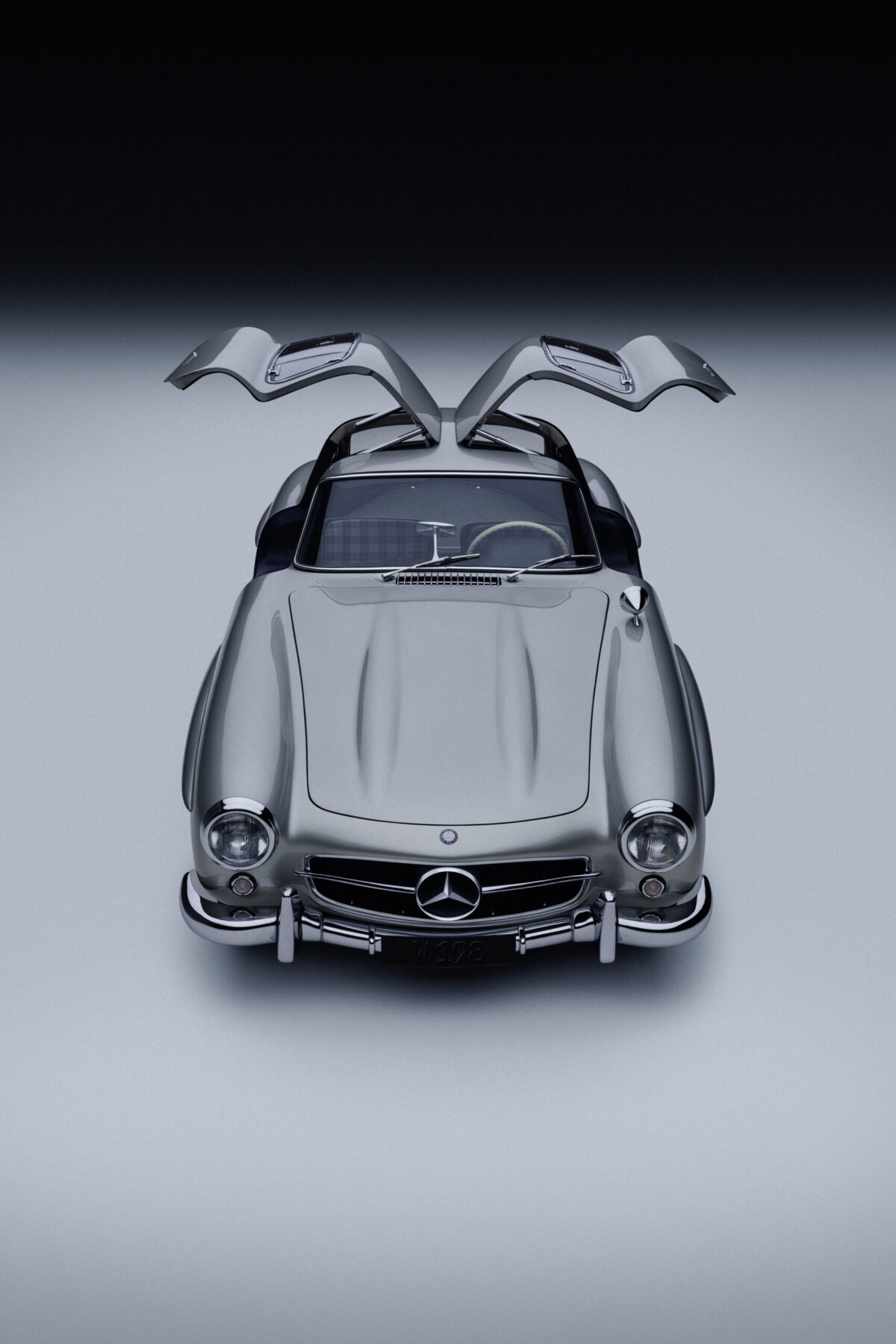
Intanto, le automobili diventano familiari. Entrano nei garage, nelle città, nei riti quotidiani. Alcuni modelli superano i due milioni di esemplari prodotti, come la serie 124 (1984–1997). Altri diventano icone culturali, come la 300 SL del 1954 o la Classe G del 1979. La strada non è più solo un percorso, ma una narrazione continua.
2026: 140 anni dopo, lo stesso movimento
Il 29 gennaio 2026, esattamente 140 anni dopo il brevetto di Carl Benz, è prevista la presentazione della nuova Classe S. È l’apertura di un programma che, nei due anni successivi, porterà al debutto di oltre 40 nuovi modelli. Numeri che raccontano una fase di transizione industriale profonda.
La ricerca si sposta su software, architetture digitali, assistenza alla guida. Nel 2021 viene omologata la guida automatizzata condizionale SAE Livello 3. Nel 2025 debutta MB.OS, un sistema operativo pensato per unificare infotainment, assistenza e gestione del veicolo. L’automobile diventa una piattaforma che evolve nel tempo.
Parallelamente, i test continuano a macinare chilometri: milioni ogni anno, l’80% concentrato nel centro di Immendingen. Nel 2025 un veicolo elettrico sperimentale percorre 5.479 chilometri in 24 ore sul circuito di Nardò. La velocità non è più l’unico parametro: contano efficienza, durata, controllo.
GUARDA LA GALLERIA
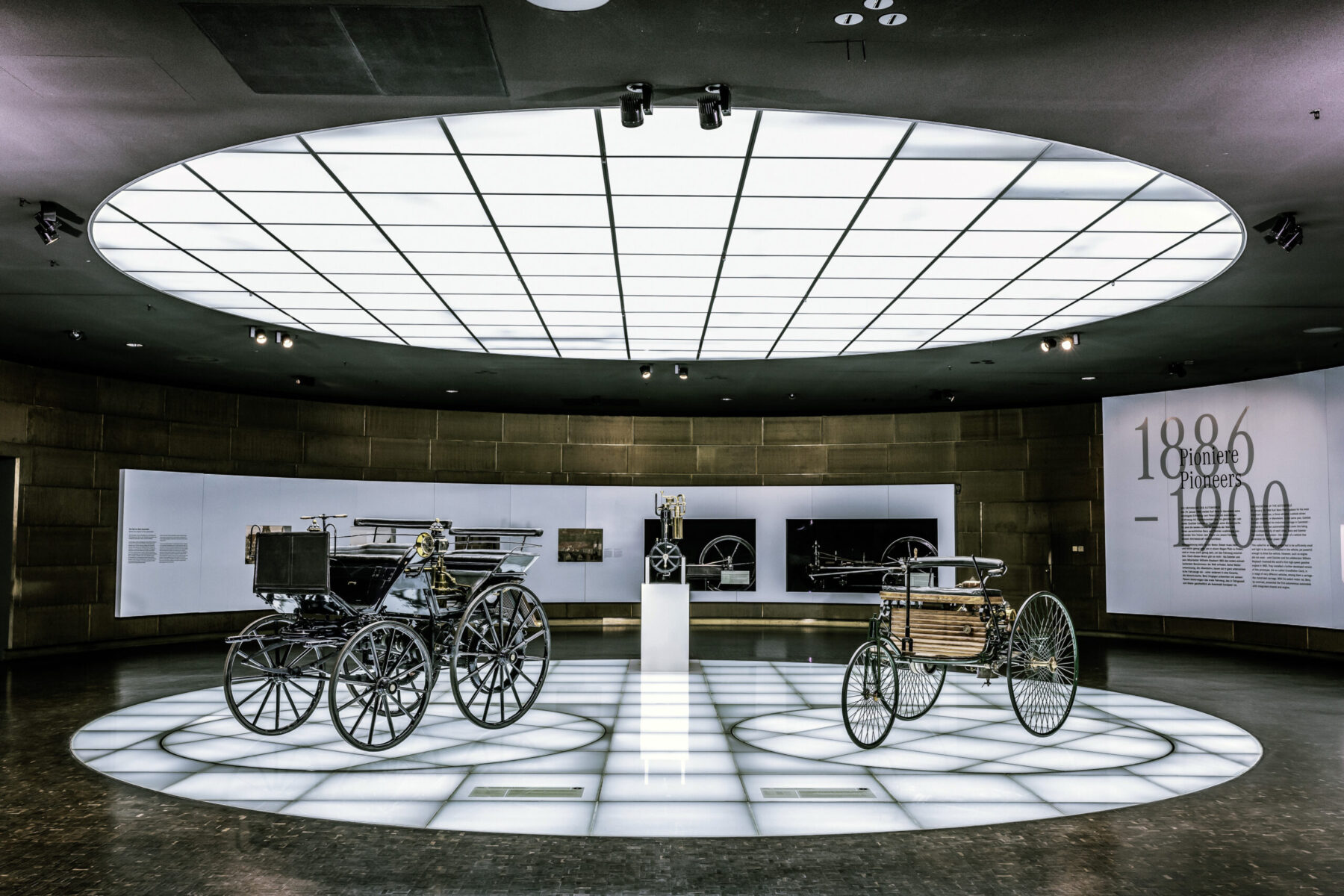

Mercedes-Benz Museum, Stuttgart. Benz Patent Motor Car (right) and Daimler Motor Carriage (left) in room Legend 1: Pioneers – The Invention of the Automobile, 1886 to 1900. In the centre is the Daimler “grandfather clock” – the first small, high-speed combustion engine. (Photo reference number in the Mercedes-Benz Classic Archives: D587470)
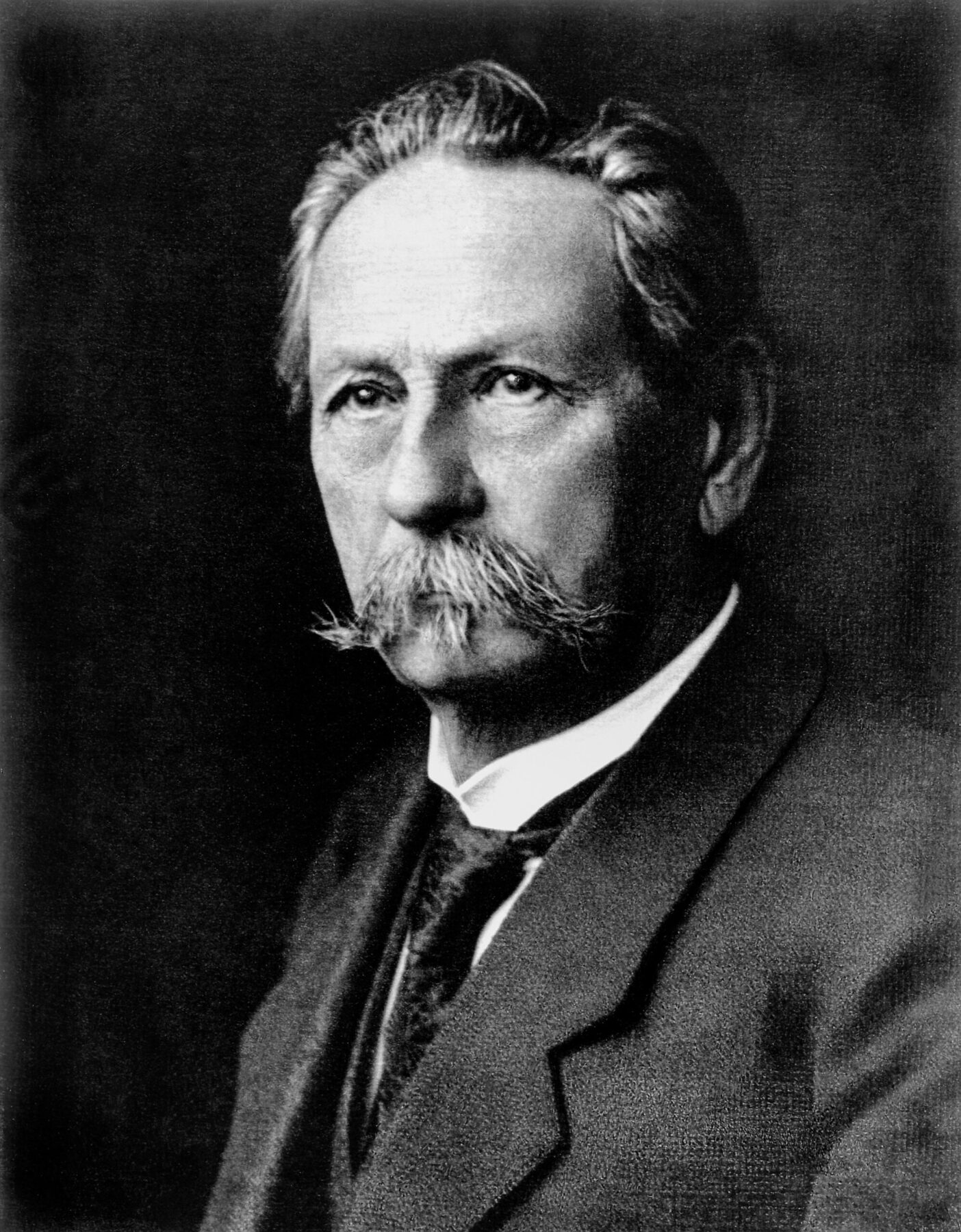
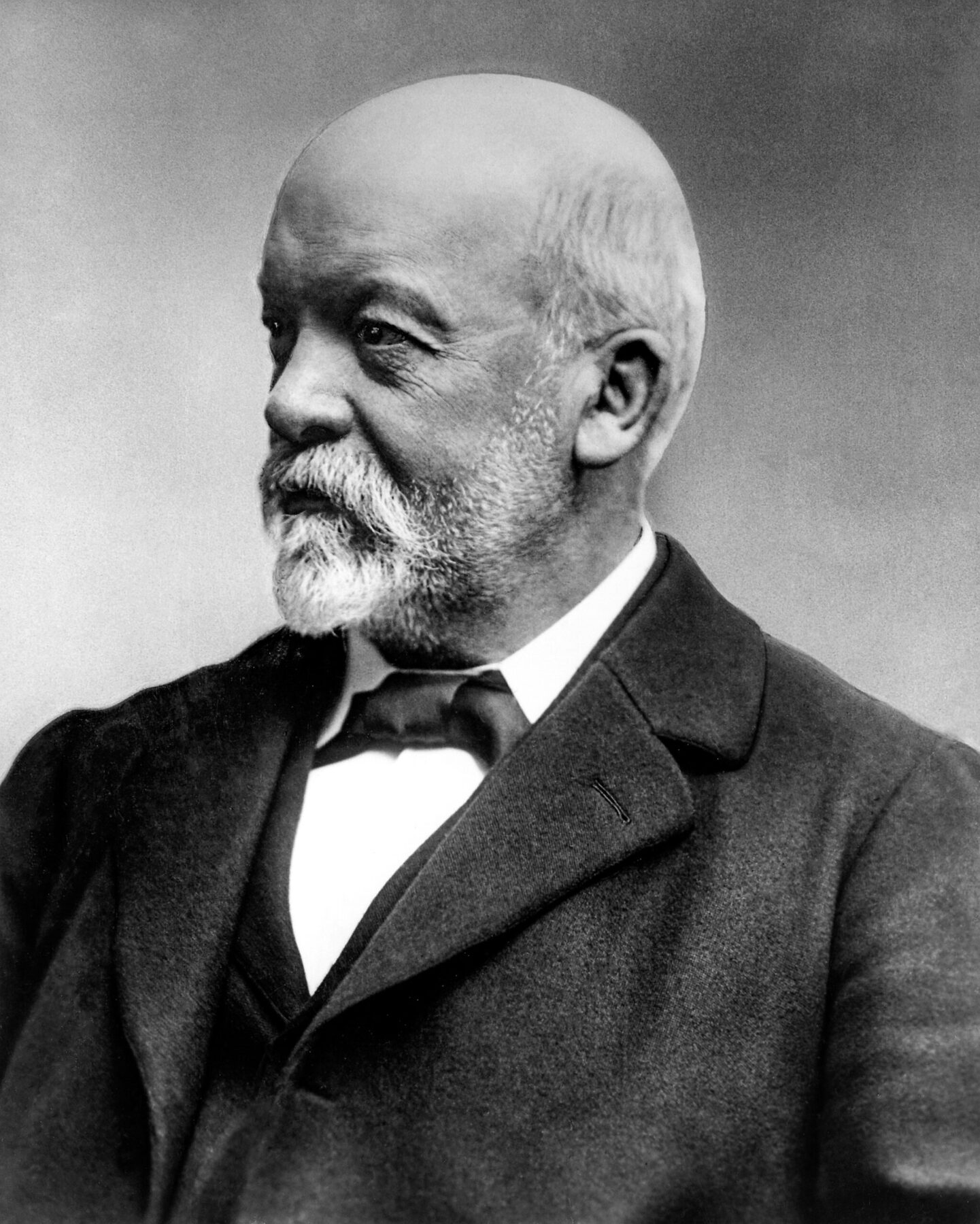
Carl Benz, 25 November 1844 to 4 April 1929. Mobility pioneer and inventor of the automobile. Portrait photo. (Photo reference number in the Mercedes-Benz Classic Archives: 13367)
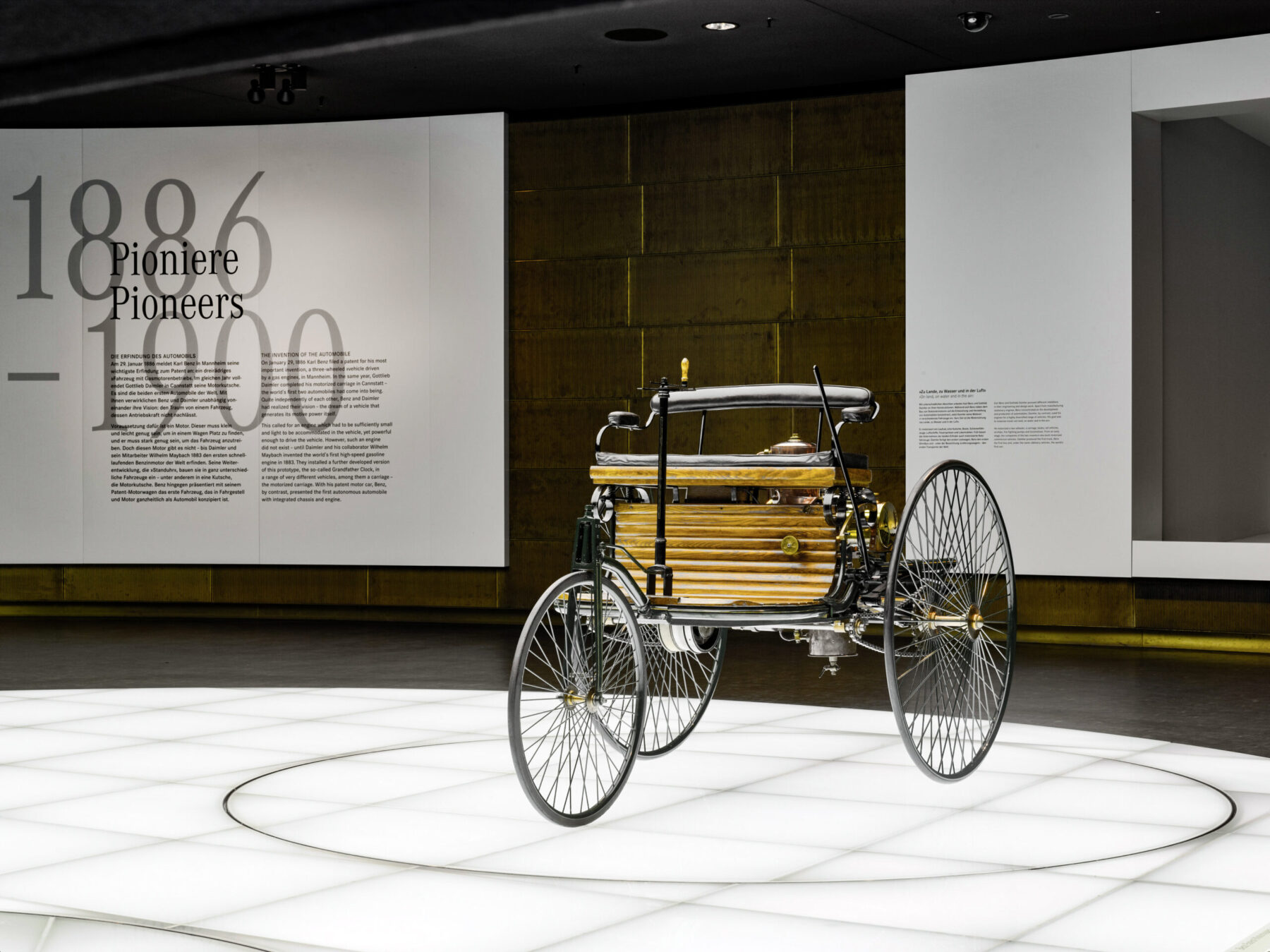
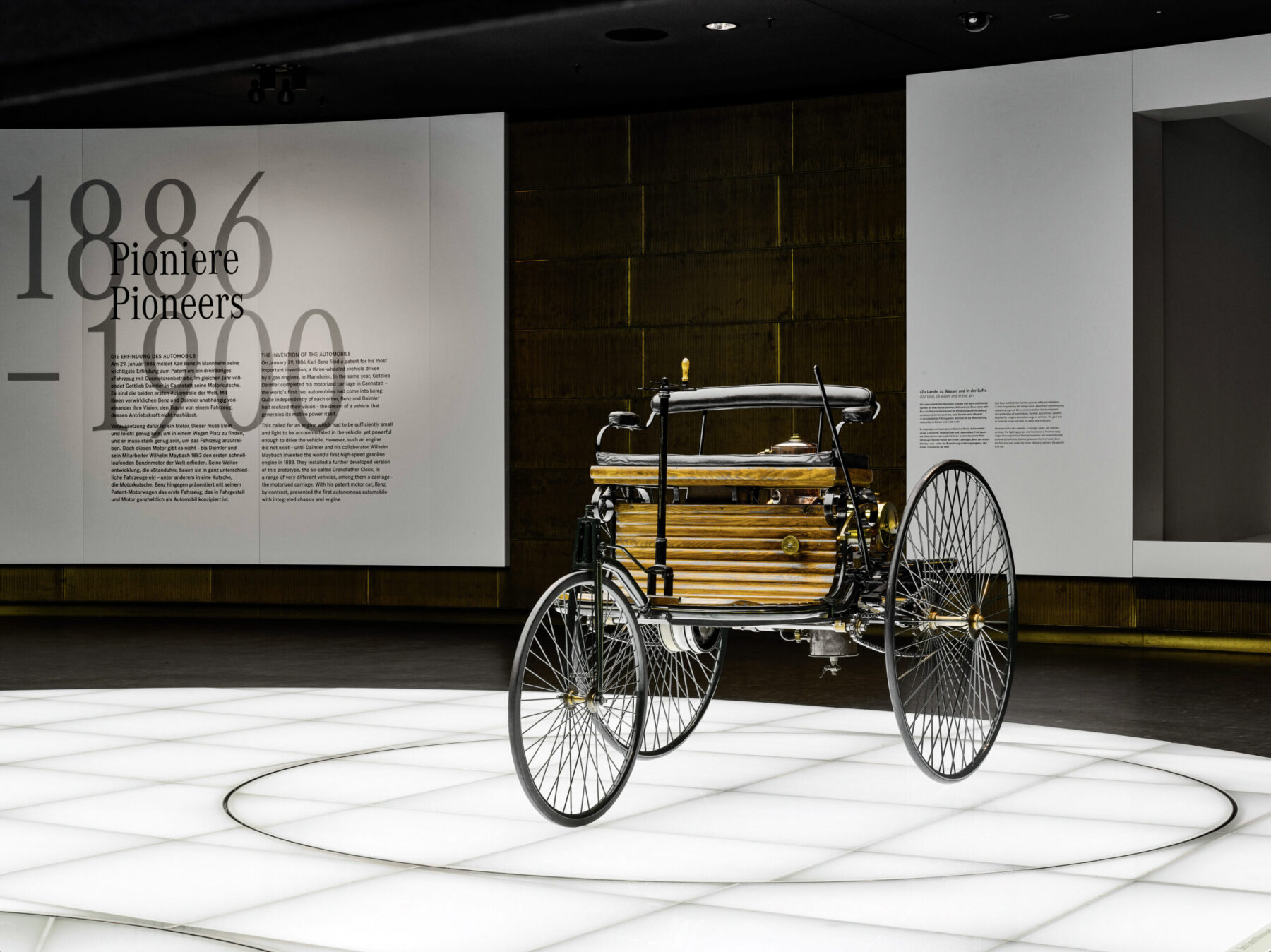
Mercedes-Benz Museum, Stuttgart: Benz Patent Motor Car in room Legend 1: Pioneers – The Invention of the Automobile, 1886 to 1900. (Photo reference number in the Mercedes-Benz Classic Archives: D109040)
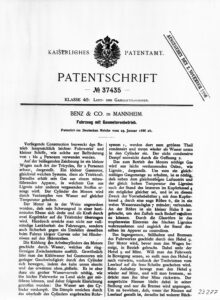
The birth certificate of the automobile: Title page of patent specification 37435 by Carl Benz for a motor car (“vehicle with gas engine”), registered on 29 January 1886. (Photo reference number in the Mercedes-Benz Classic Archives: 23277)
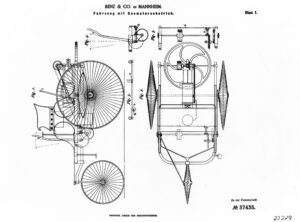
The birth certificate of the automobile: Technical drawings from patent specification 37435 by Carl Benz for a motor car (“vehicle with gas engine”), registered on 29 January 1886. (Photo reference number in the Mercedes-Benz Classic Archives: 23279)
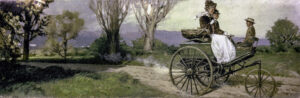
In August 1888, Bertha Benz, wife of automobile inventor Carl Benz, undertook the world’s first long-distance journey in an automobile. Driving the Benz Patent Motor Car Model 3, she travelled from Mannheim to Pforzheim and back. Historical painting. (Photo reference number in the Mercedes-Benz Classic Archives: B39394)
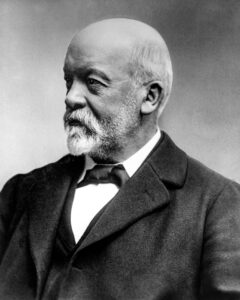
Gottlieb Daimler, 17 March 1834 to 6 March 1900. Mobility pioneer and inventor of the four-wheeled automobile. Portrait photo. (Photo reference number in the Mercedes-Benz Classic Archives: 19779)
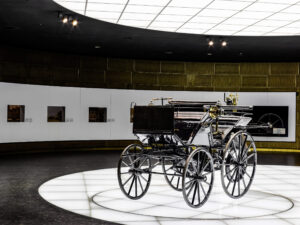
Mercedes-Benz Museum, Stuttgart: Daimler motor carriage in room Legend 1: Pioneers – The Invention of the Automobile, 1886 to 1900. (Photo reference number in the Mercedes-Benz Classic Archives: D104815)
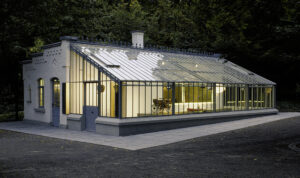
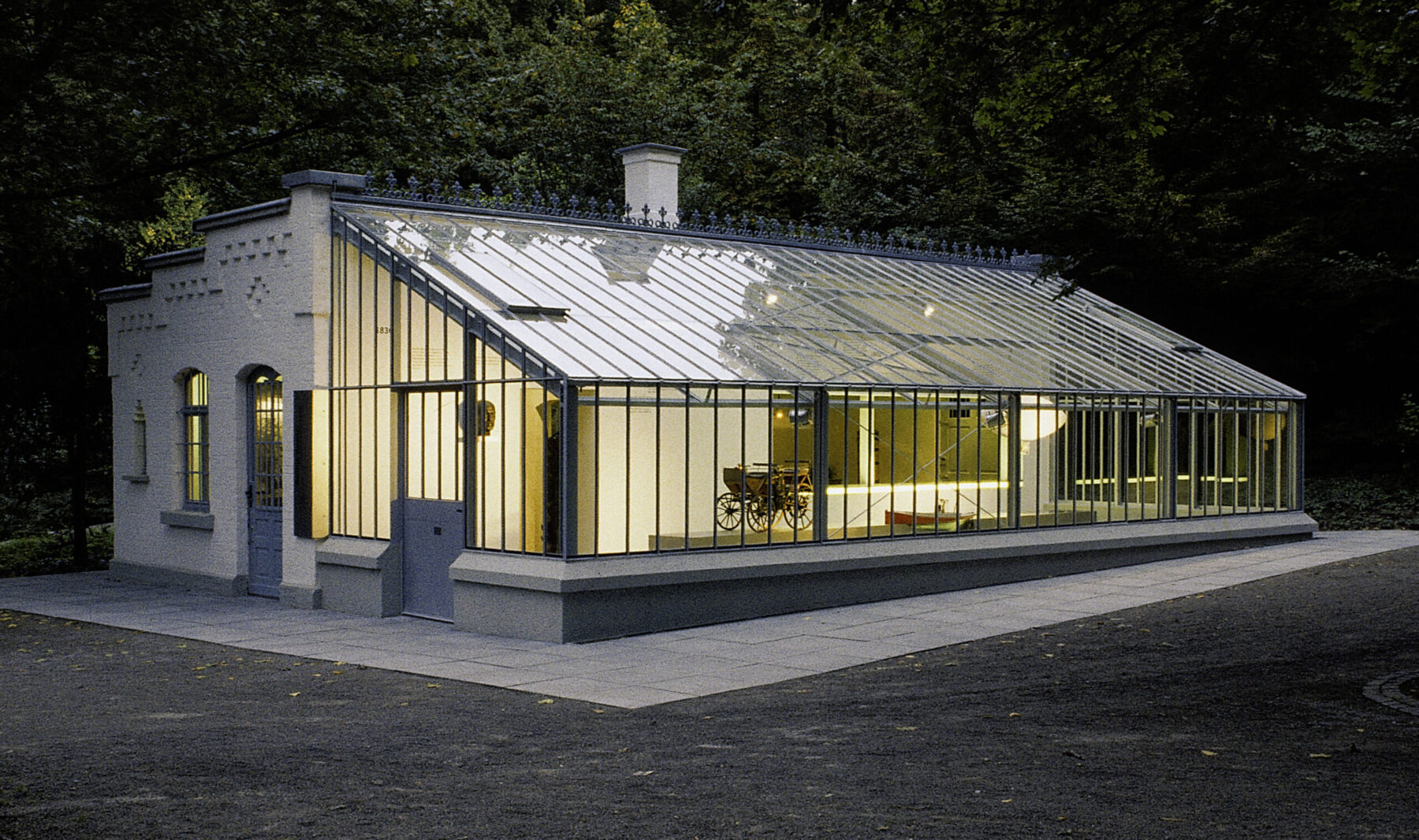
Gottlieb Daimler’s former test workshop in the garden house of his villa in Cannstatt. This is where the world’s first lightweight, high-speed vehicle engine was developed. Today, it is the publicly accessible Gottlieb Daimler Memorial. (Photo reference number in the Mercedes-Benz Classic Archives: A92F1885)
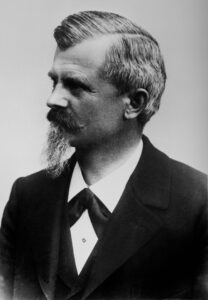
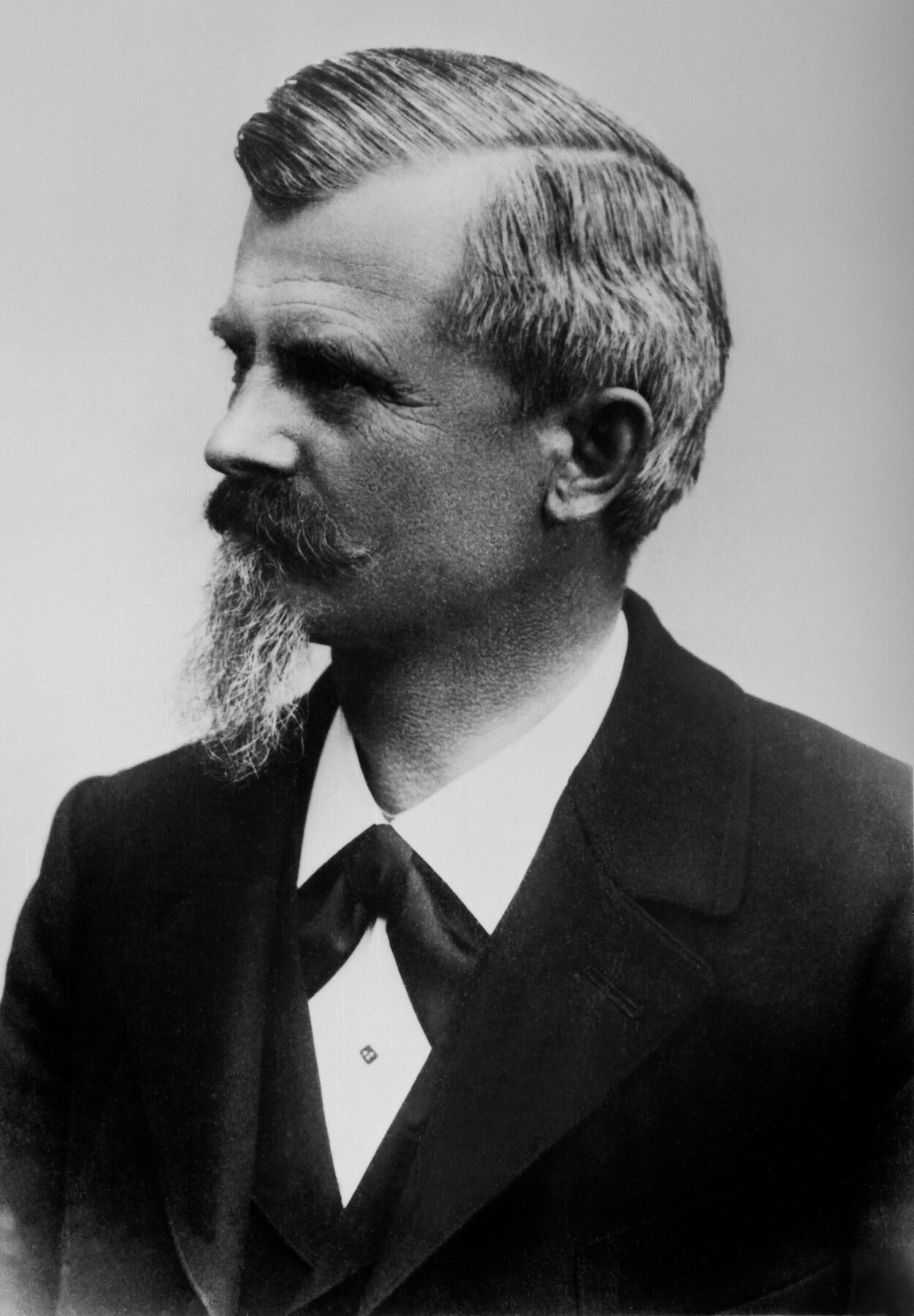
Wilhelm Maybach, 9 February 1846 to 29 December 1929. Mobility pioneer, designer of the first modern automobile, chief designer at Daimler-Motoren-Gesellschaft until 1907. Portrait photo. (Photo reference number in the Mercedes-Benz Classic Archives: 30898)
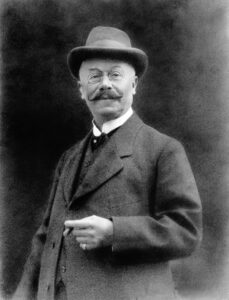
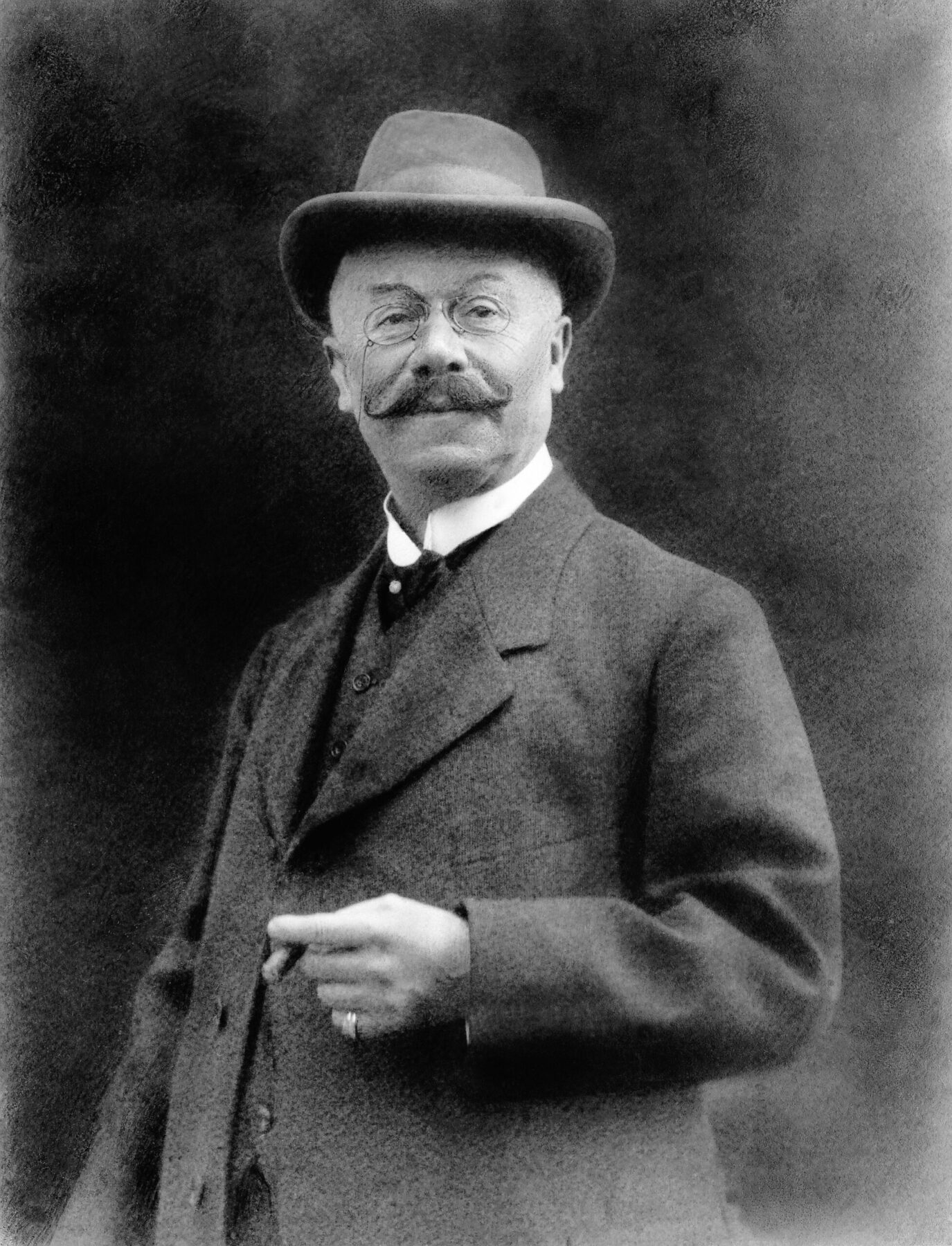
Emil Jellinek, 6 April 1853 to 21 January 1918. Visionary of automobility and influential business partner of Daimler-Motoren-Gesellschaft at the end of the 19th century. Portrait photo. (Photo reference number in the Mercedes-Benz Classic Archives: 50124)
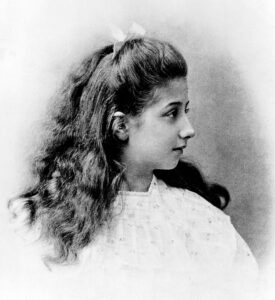
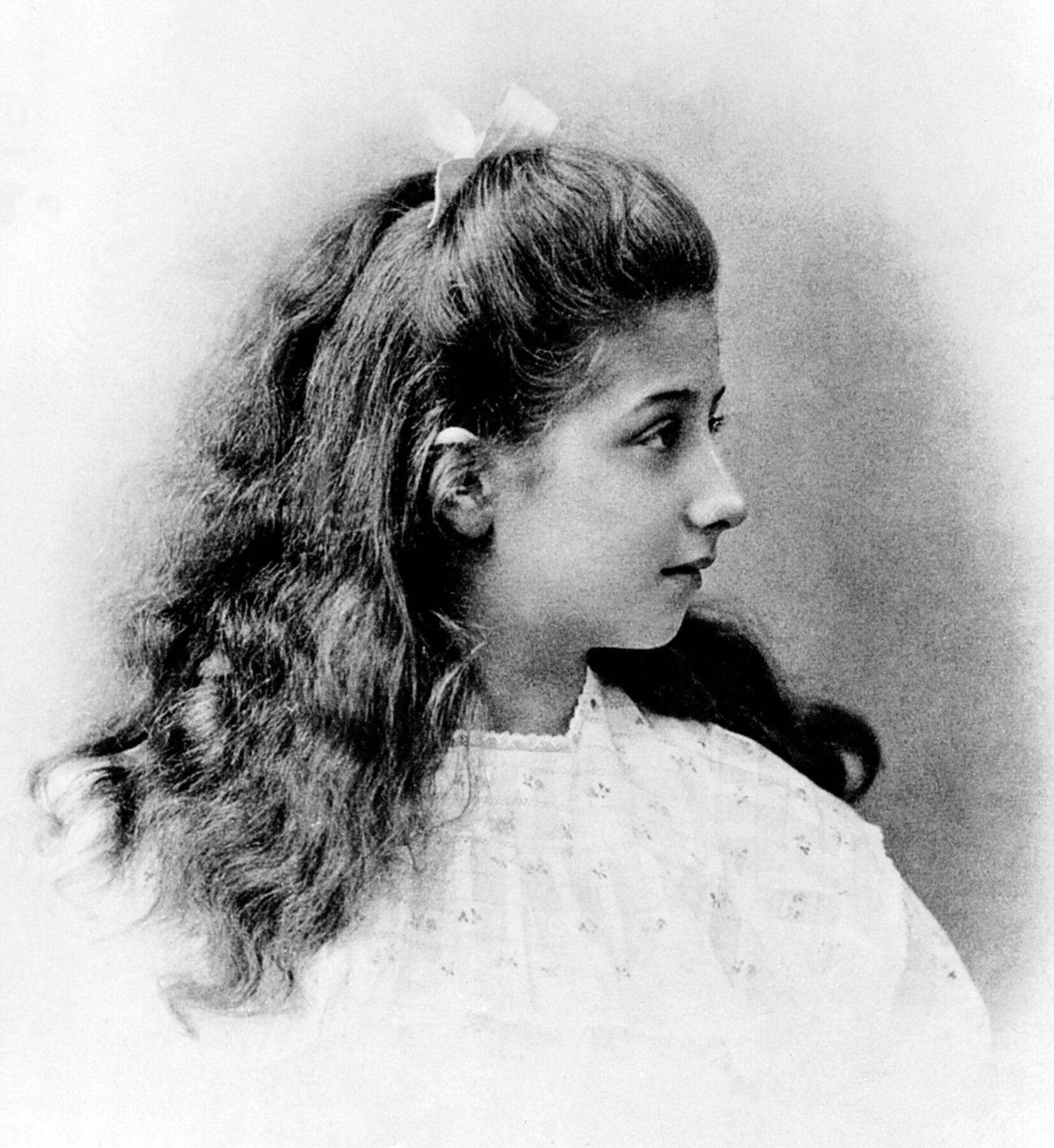
Mercédès Jellinek, 16 September 1889 to 23 February 1929. Daughter of Emil Jellinek and namesake of the Mercedes brand. Portrait photo. (Photo reference number in the Mercedes-Benz Classic Archives: U84056)
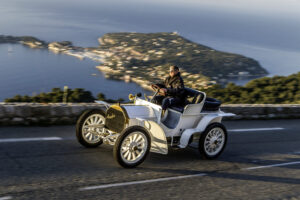
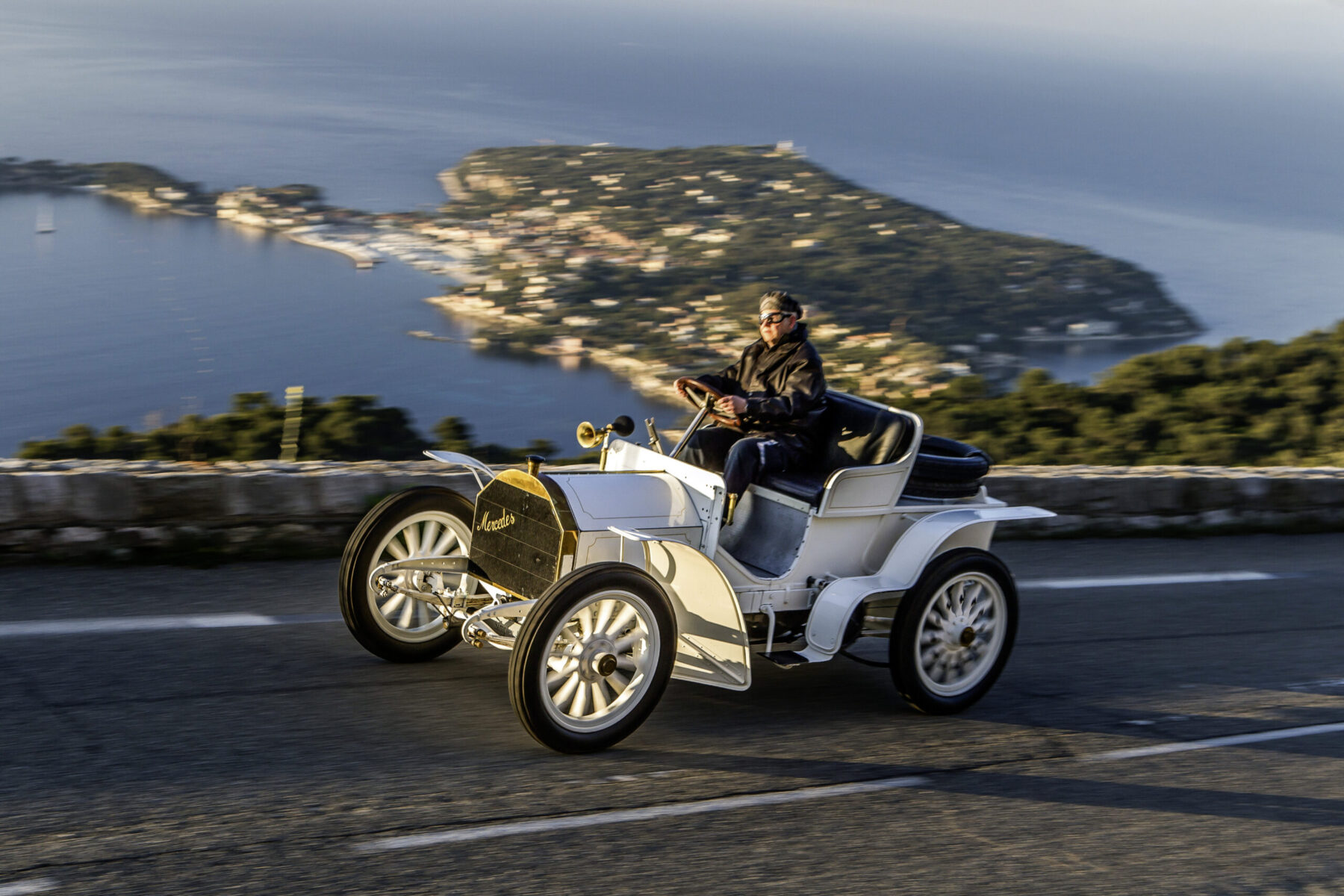
In 1900, the Mercedes 35 hp was created with a high-performance drive, long wheelbase and low centre of gravity. It is considered the first modern automobile ever and was the first to bear the Mercedes name. The Mercedes-Simplex model family was derived from it in 1902. Driving shot of a Mercedes-Simplex 40 hp from 1903 from the Mercedes-Benz Classic Insight “The Mercédès Era” in Nice and the surrounding area, April 2017. (Photo reference number in the Mercedes-Benz Classic Archives: D368603)
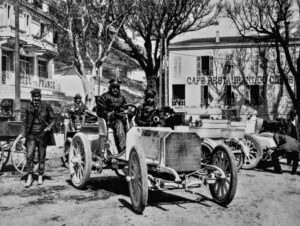
Mercedes 35 hp, the first Mercedes and the first modern automobile in history. Photo of Baron Henri de Rothschild’s Mercedes 35 hp racing car at the Nice–La Turbie hill climb on 29 March 1901 during the Racing Week in Nice, 25 to 29 March 1901. At the wheel: Wilhelm Werner. (Photo reference number in Mercedes-Benz Classic Archives: C31392)

On 28 and 29 June 1926, Benz & Cie. and Daimler-Motoren-Gesellschaft merged to form Daimler-Benz AG. The new company registered the trademark for the new Mercedes-Benz brand on 21 August 1926. It combined the previous trademarks: the three-pointed star came from Mercedes, the laurel wreath from Benz. (Photo reference number in the Mercedes-Benz Classic Archives: 2001DIG410)
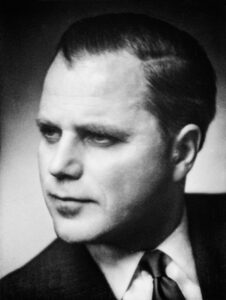
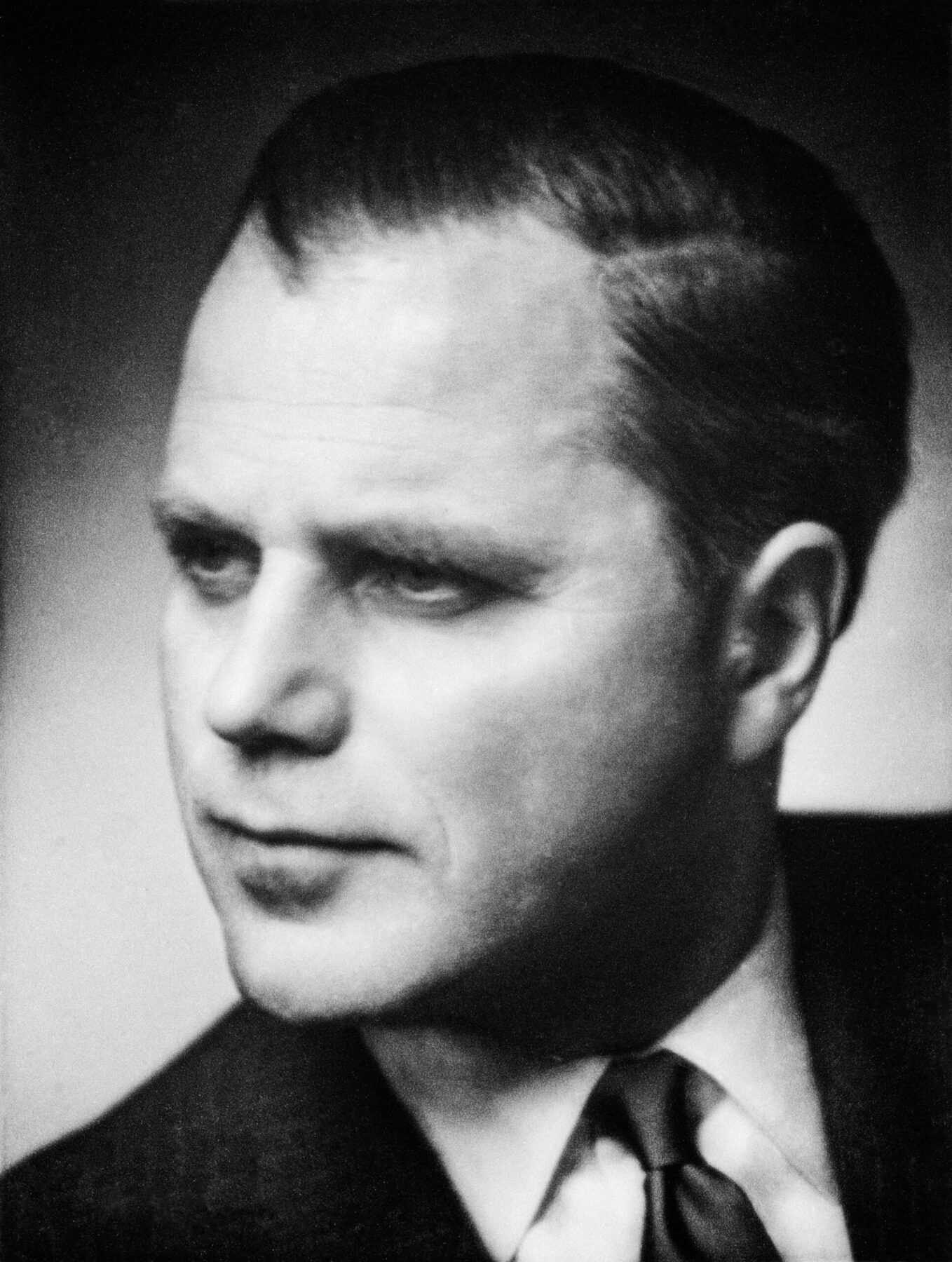
Béla Barényi, 1 March 1907 to 30 May 1997. Pioneer of passive safety and inventor of the safety body with crumple zones and a rigid passenger cell. Portrait photo. (Photo reference number in the Mercedes-Benz Classic Archives: A51485)
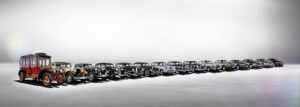
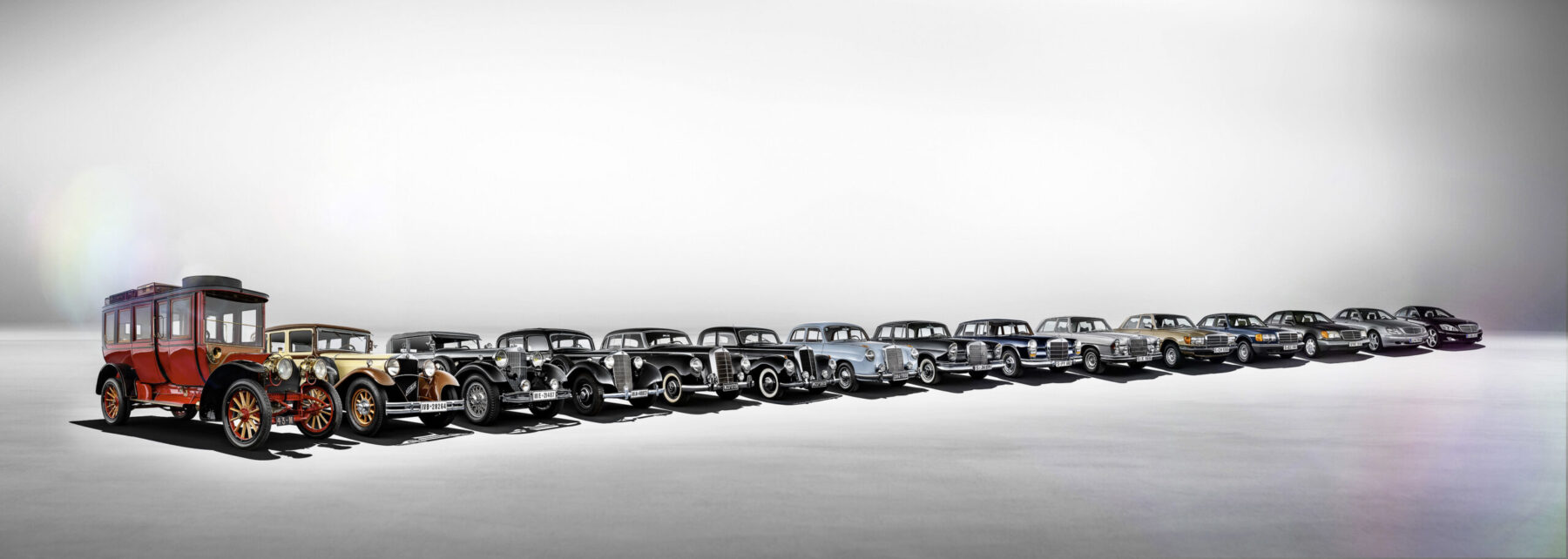
The unique tradition of the Mercedes-Benz S-Class: its history began in 1903 with the construction of the powerful Mercedes-Simplex 60 hp, which Emil Jellinek had converted into a luxurious touring car in 1904. It is on display in the Mercedes-Benz Museum. The name S-Class made its debut in 1972 in the 116 series. (Photo reference number in the Mercedes-Benz Classic Archives: 2008DIG3846)
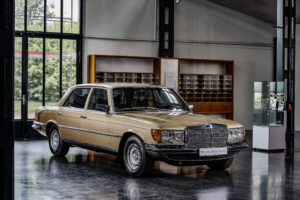
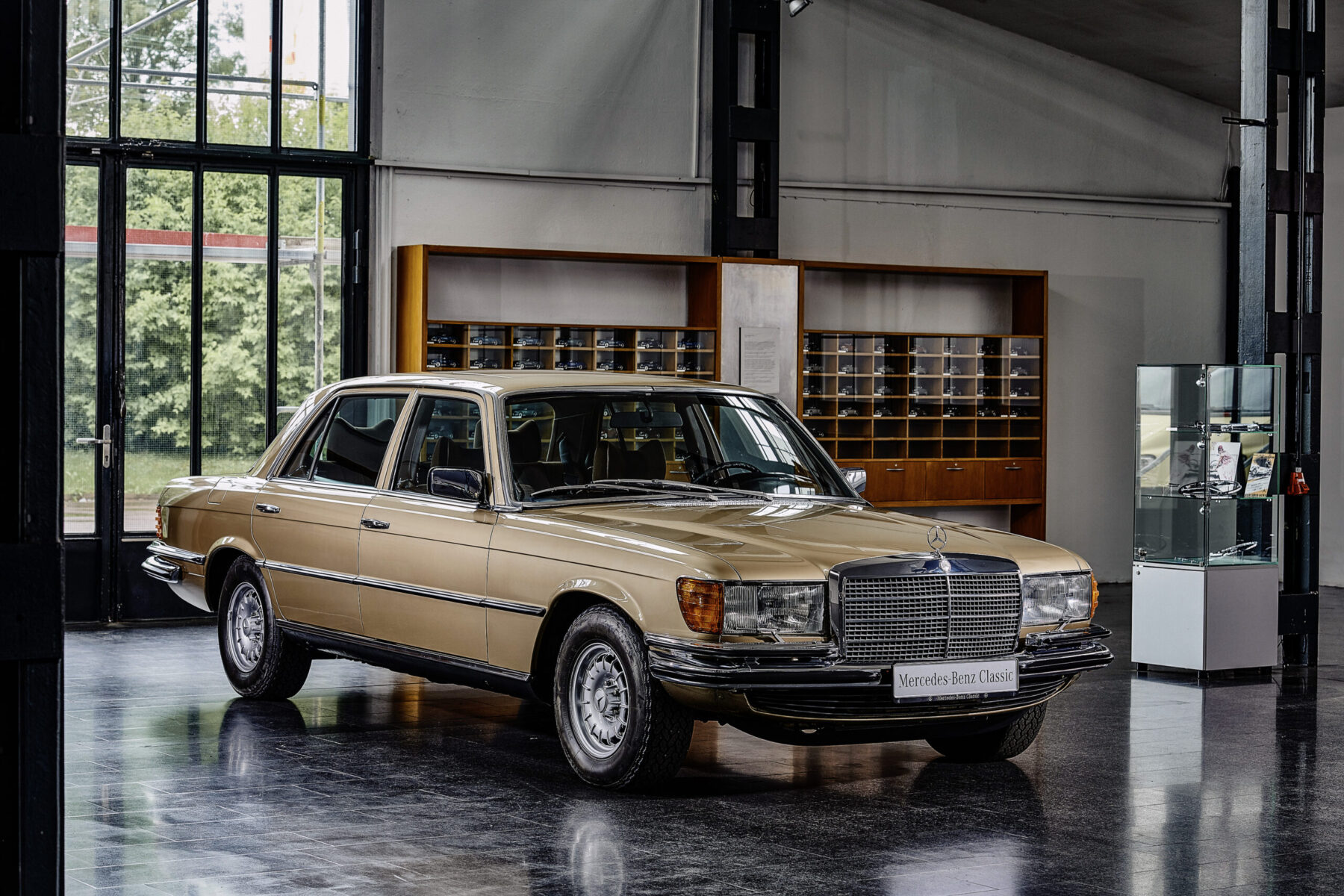
Mercedes-Benz 450 SEL 6.9 from 1980. Photo taken at the Mercedes-Benz Classic Centre, Fellbach, in 2022. The 116 series was the first Mercedes-Benz luxury class to bear the name S-Class in 1972. (Photo reference number in the Mercedes-Benz Classic Archives: D783243)
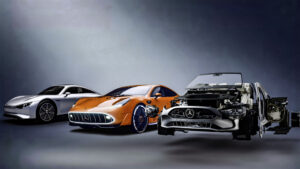
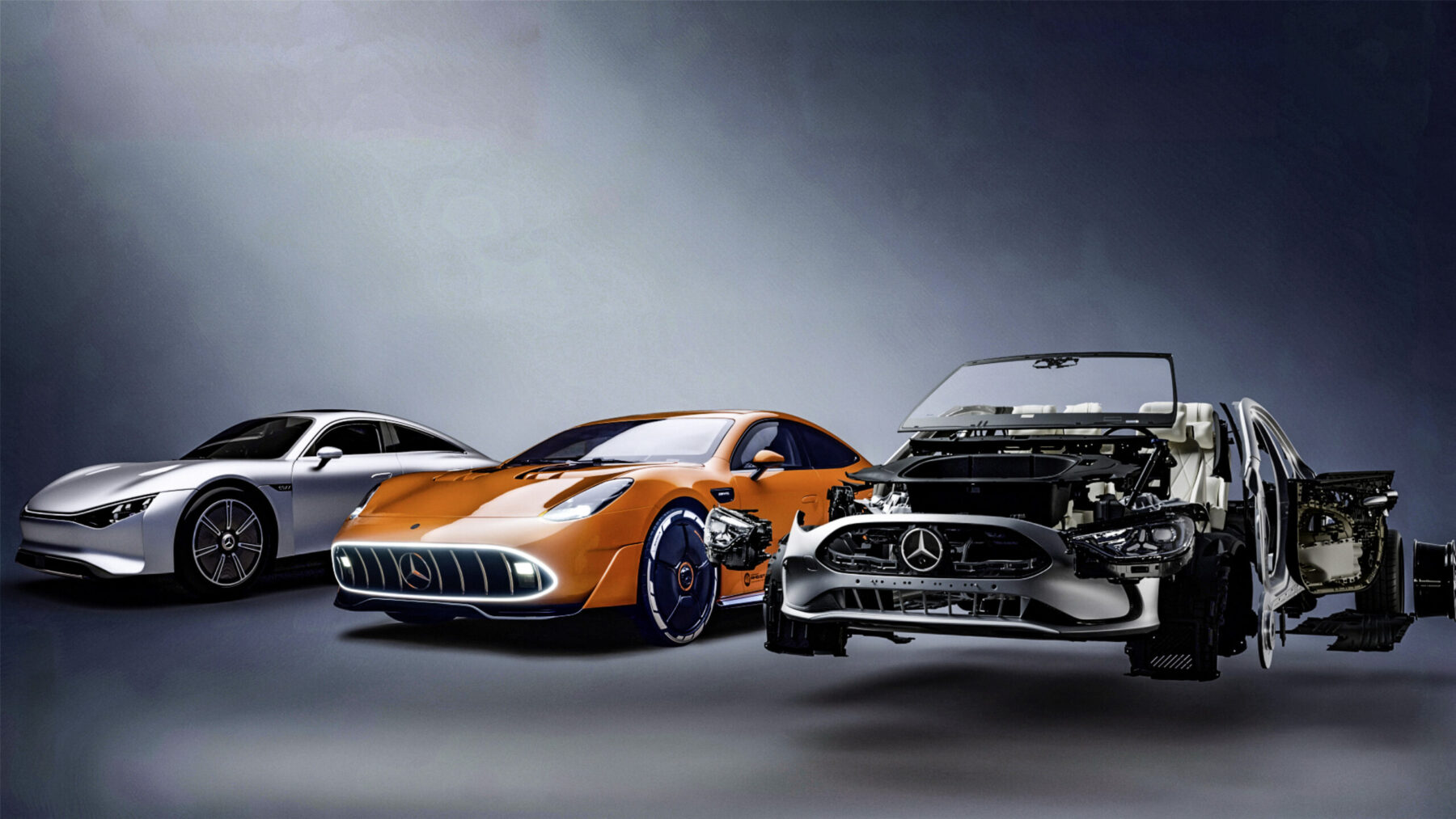
Vehicles from Mercedes-Benz’s pioneering XX technology programmes. On the left, the VISION EQXX with a focus on comprehensive electric efficiency in everyday use. In the middle, the CONCEPT AMG GT XX with a focus on electric performance with a highly innovative powertrain. On the right, examples of innovative components and materials from the Tomorrow XX programme. Photo from December 2025. (Photo reference number in the Mercedes-Benz Classic Archives: 25C0332_001)
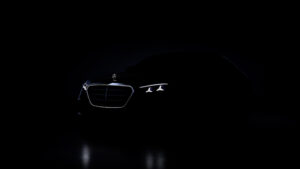
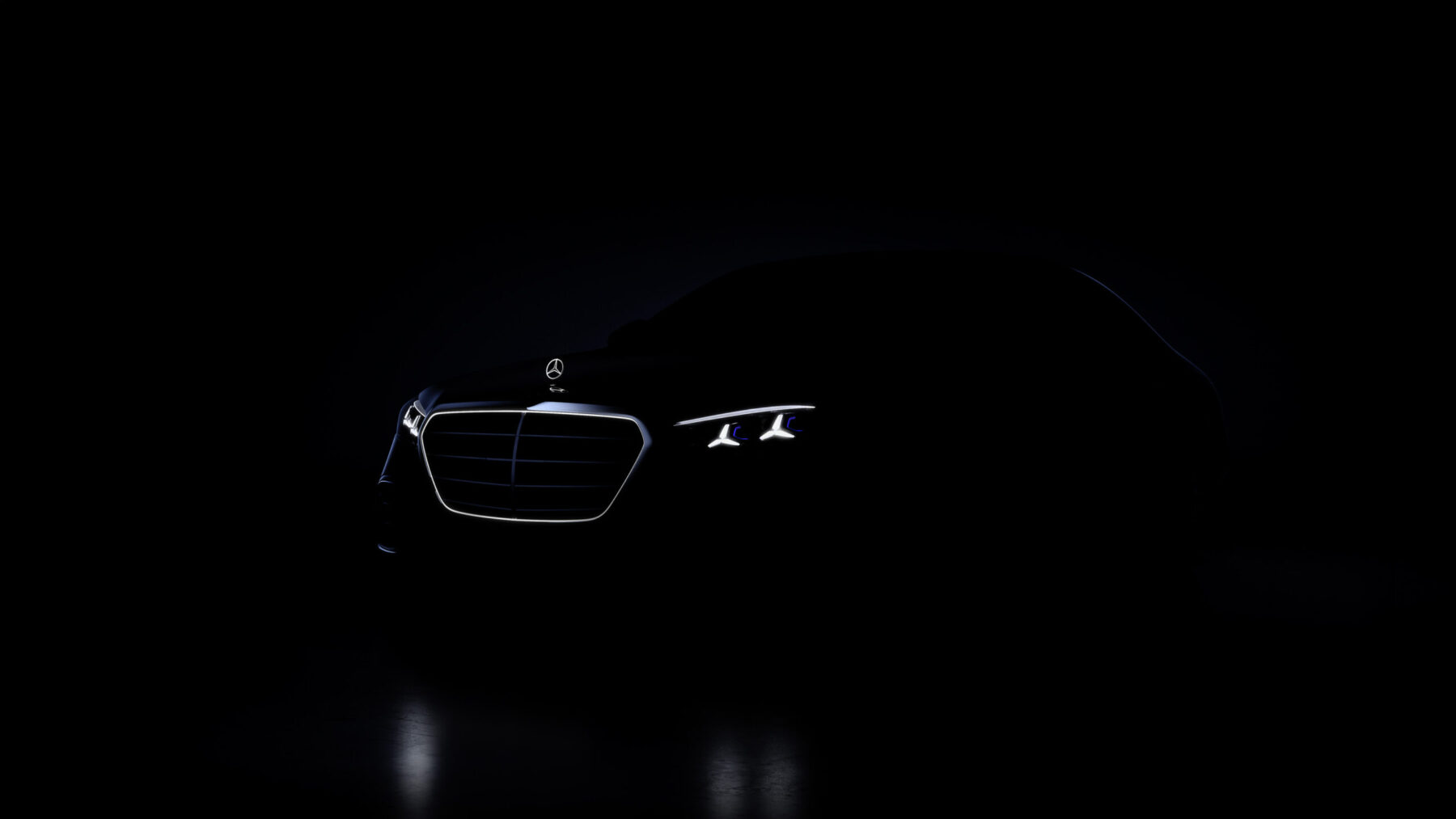
Preview of the new Mercedes-Benz S-Class 223 series. It will make its world premiere on 29 January 2026.
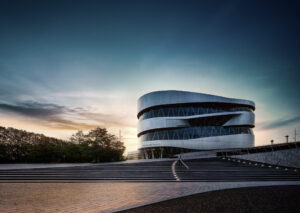
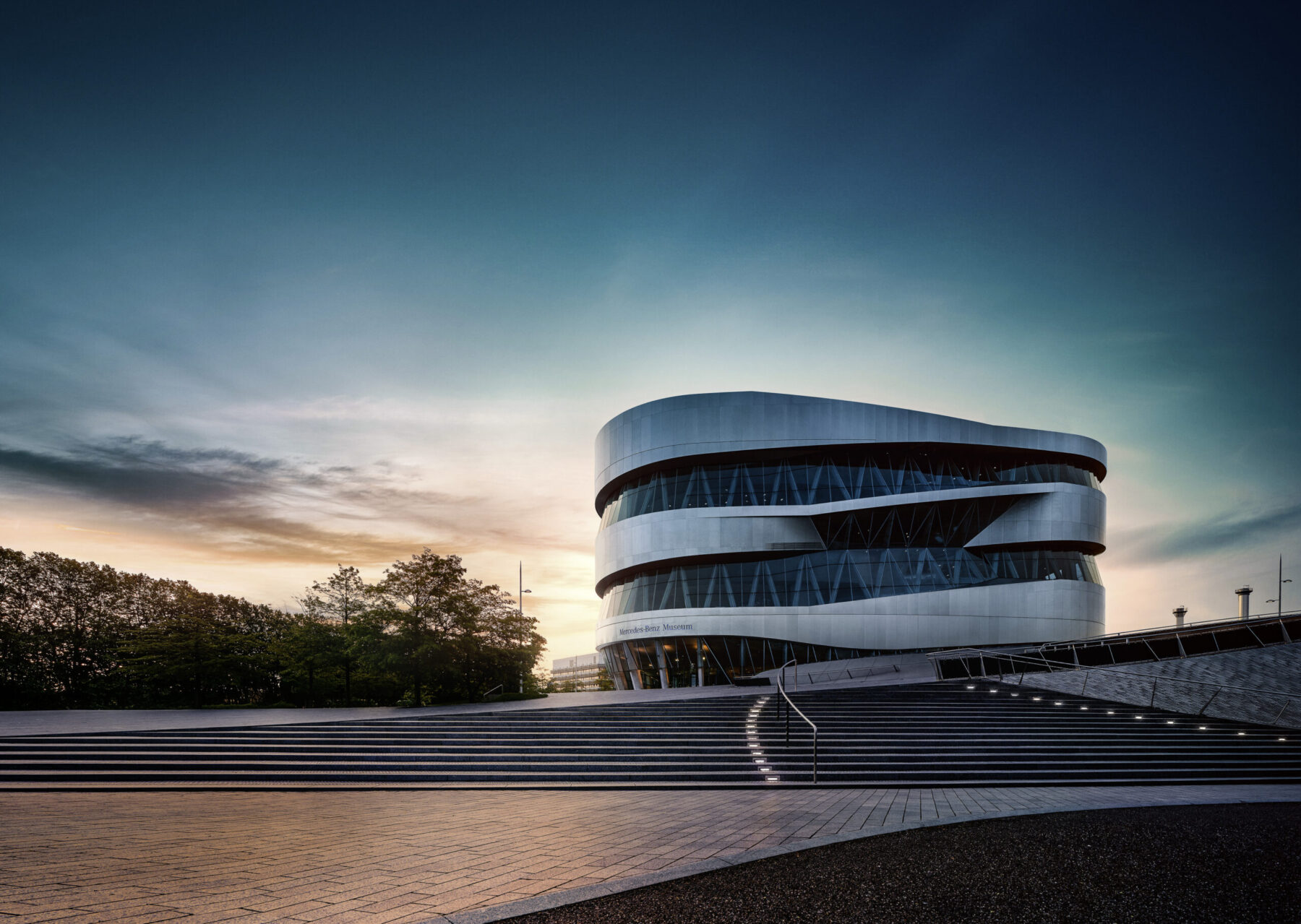
Mercedes-Benz Museum, Stuttgart. Opened in 2006, it embodies the brand’s heritage and tradition of innovation. The shape of the human DNA inspired the building’s design. (Photo reference number in the Mercedes-Benz Classic Archives: D855859)
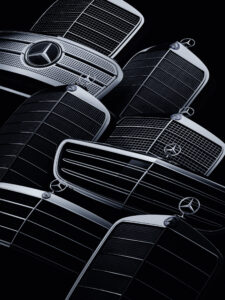
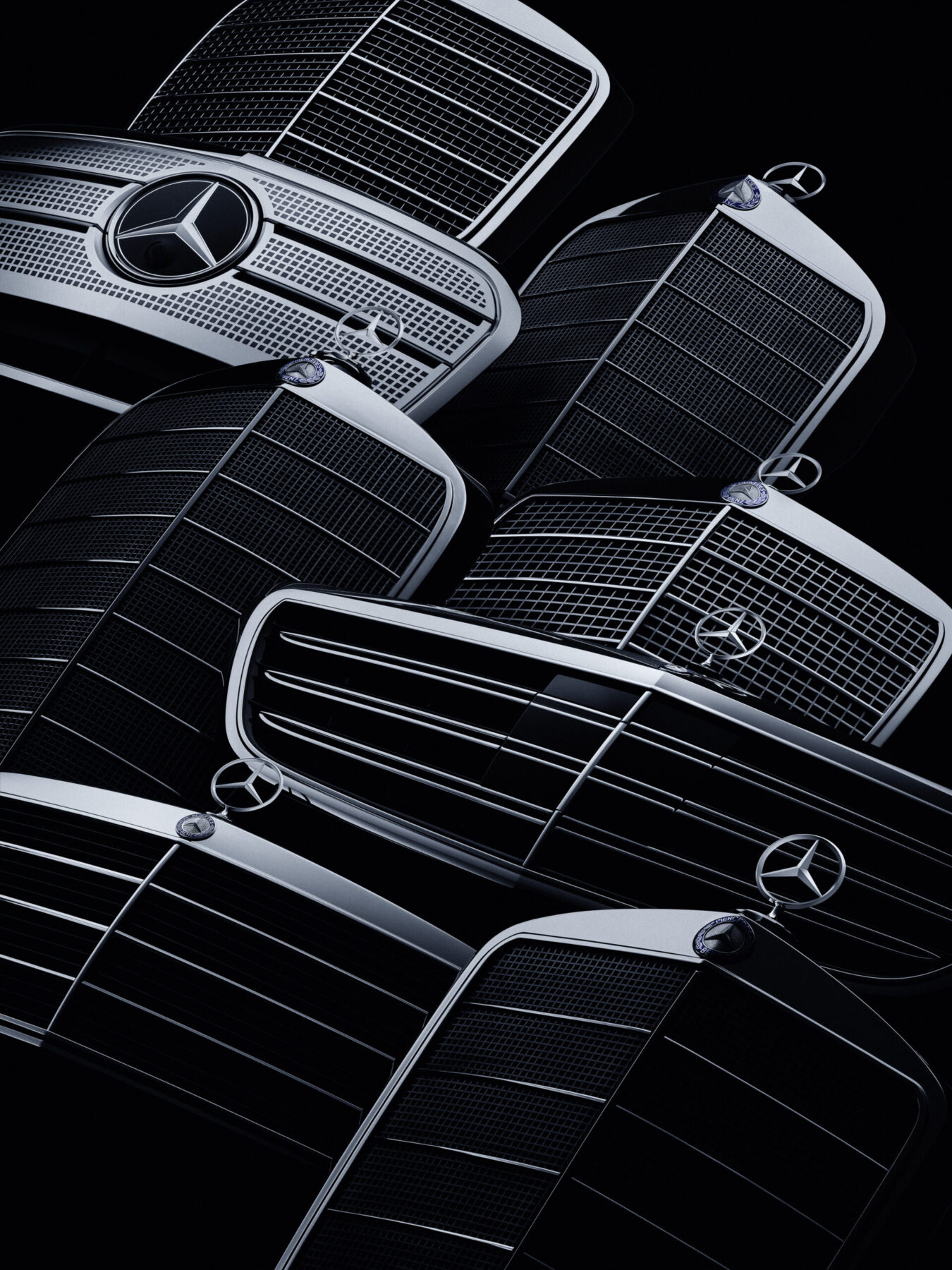
Iconic design: Mercedes-Benz radiator grilles from different eras. Studio shot, taken in 2025.
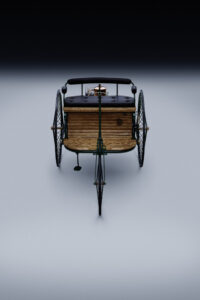
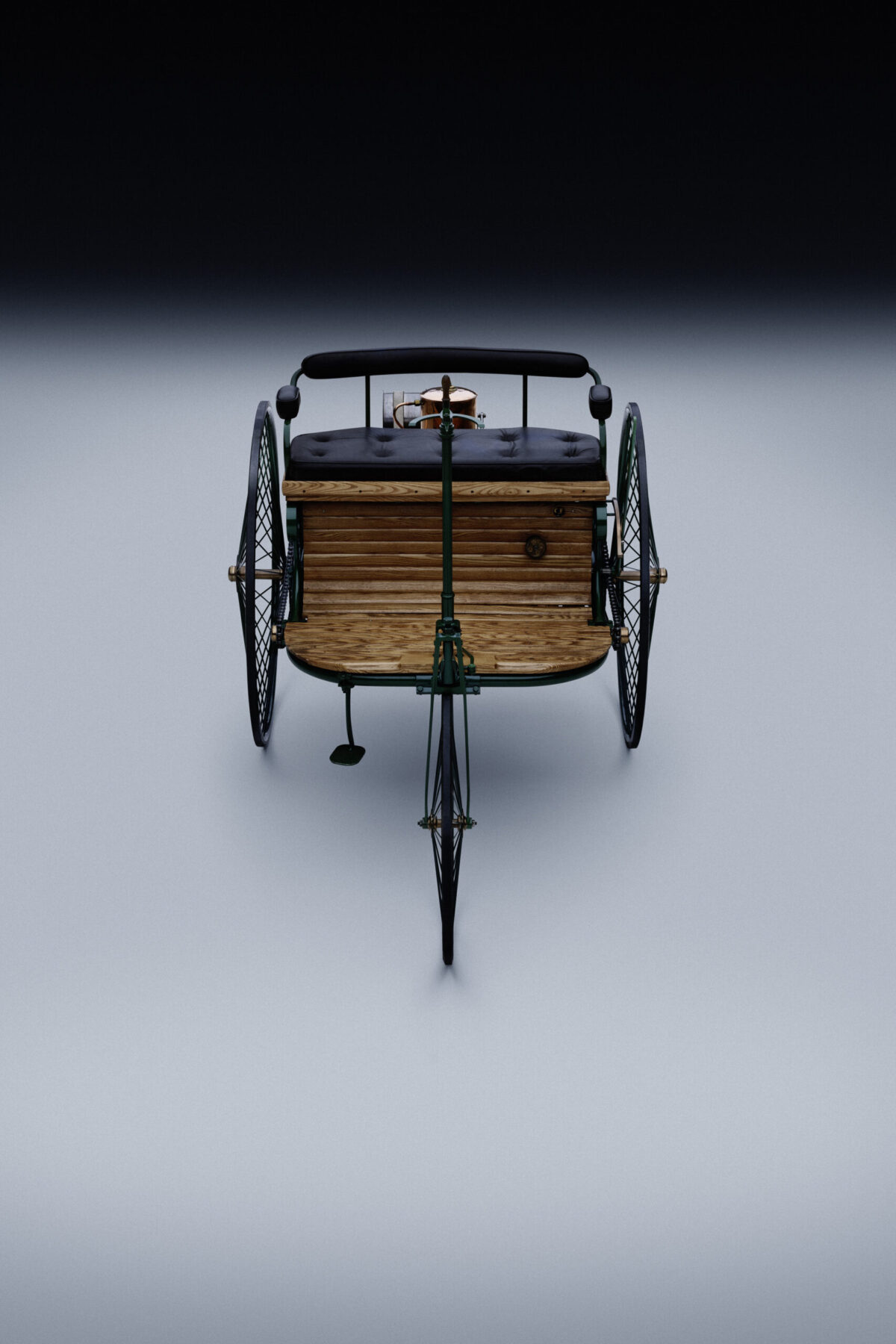
Benz Patent Motor Car. Authentic replica of the world’s first automobile from 1886. Studio shot from the front, taken in 2025.
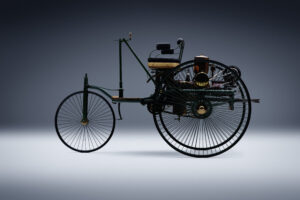
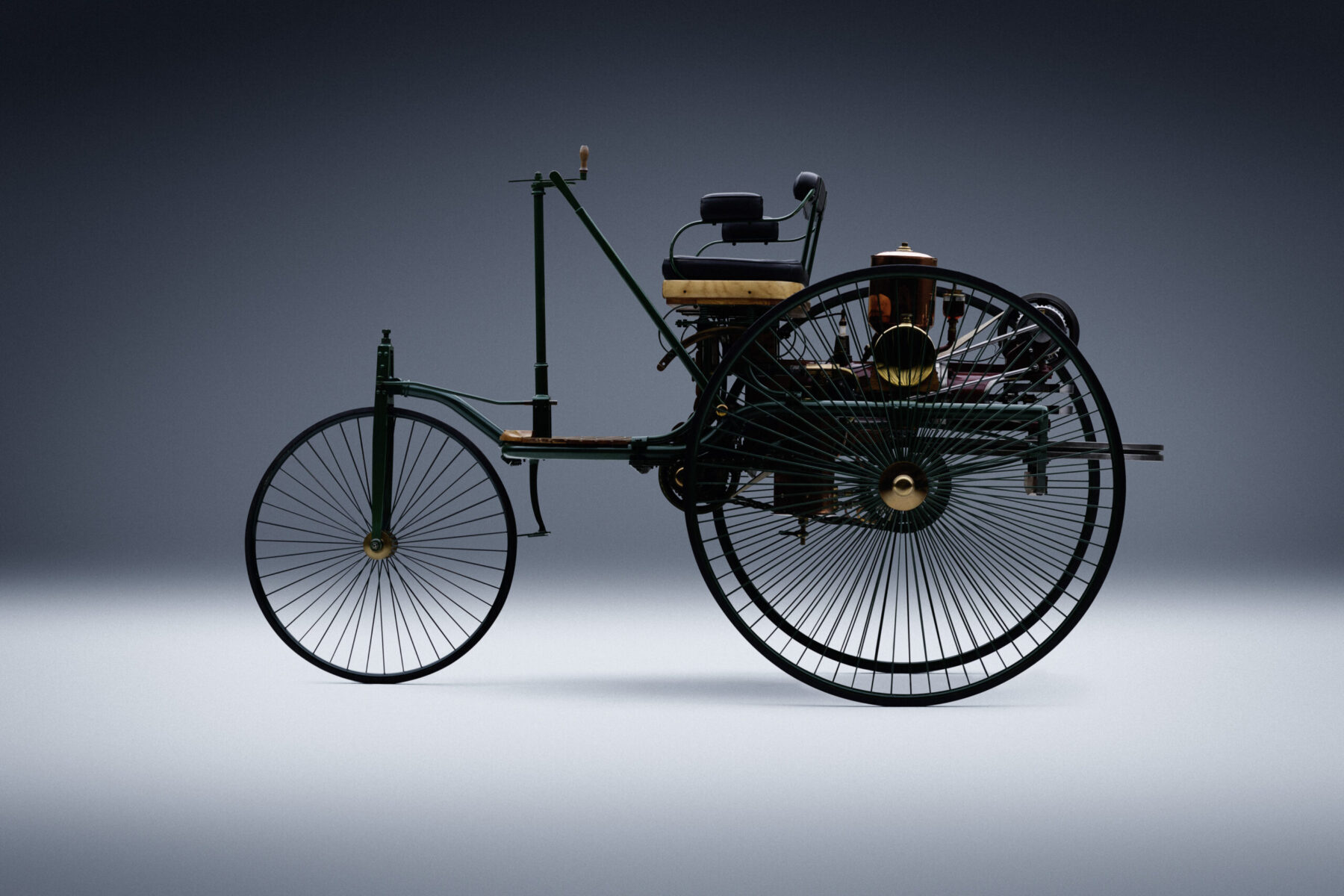
Benz Patent Motor Car. Authentic replica of the world’s first automobile from 1886. Studio shot from the left, taken in 2025.
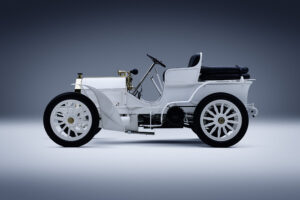
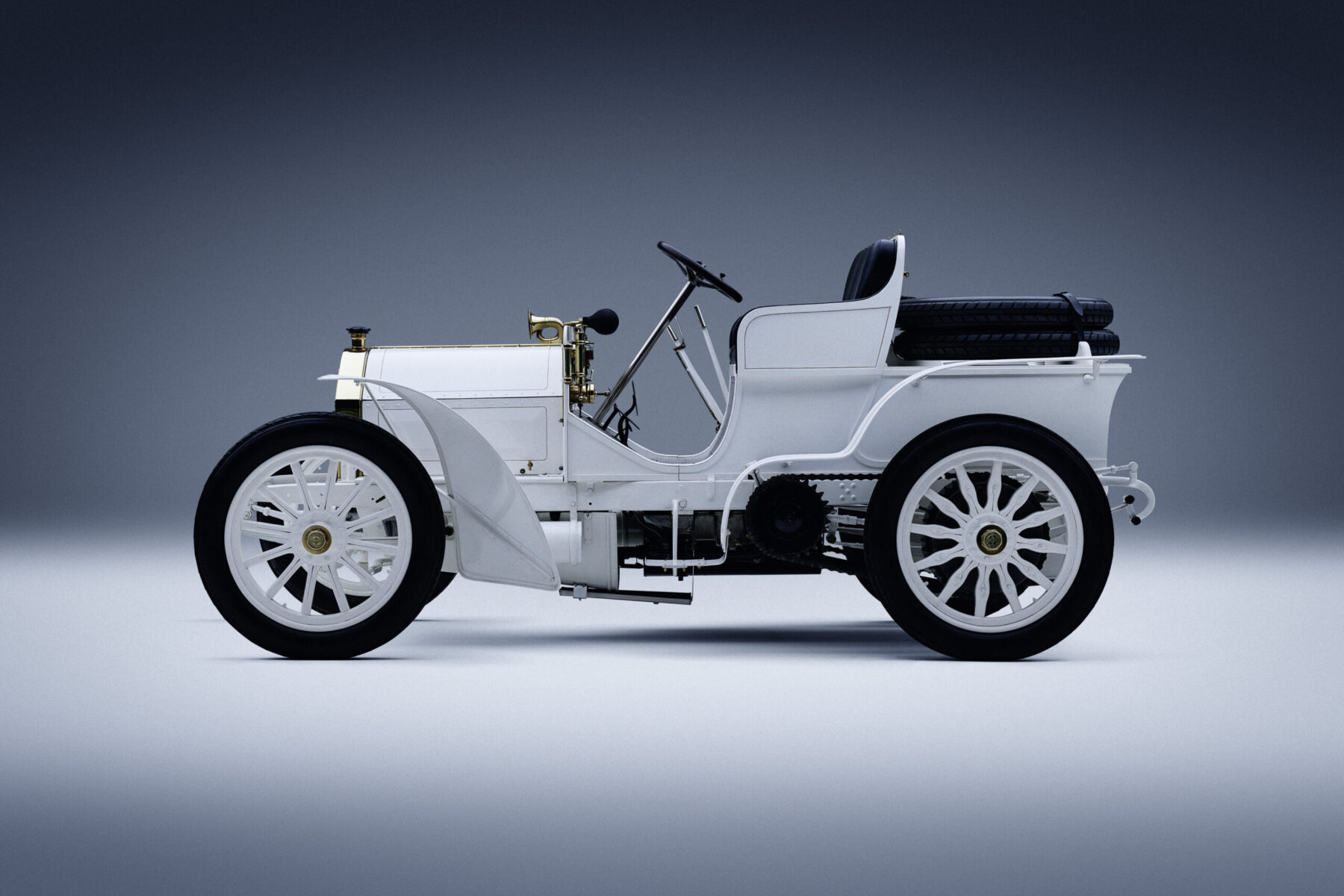
Mercedes-Simplex 40 hp, production period 1902 to 1903. Vehicle from 1902. Studio shot from the left, taken in 2025.
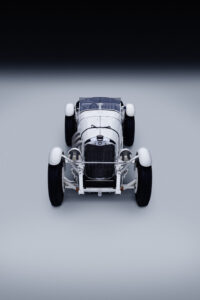
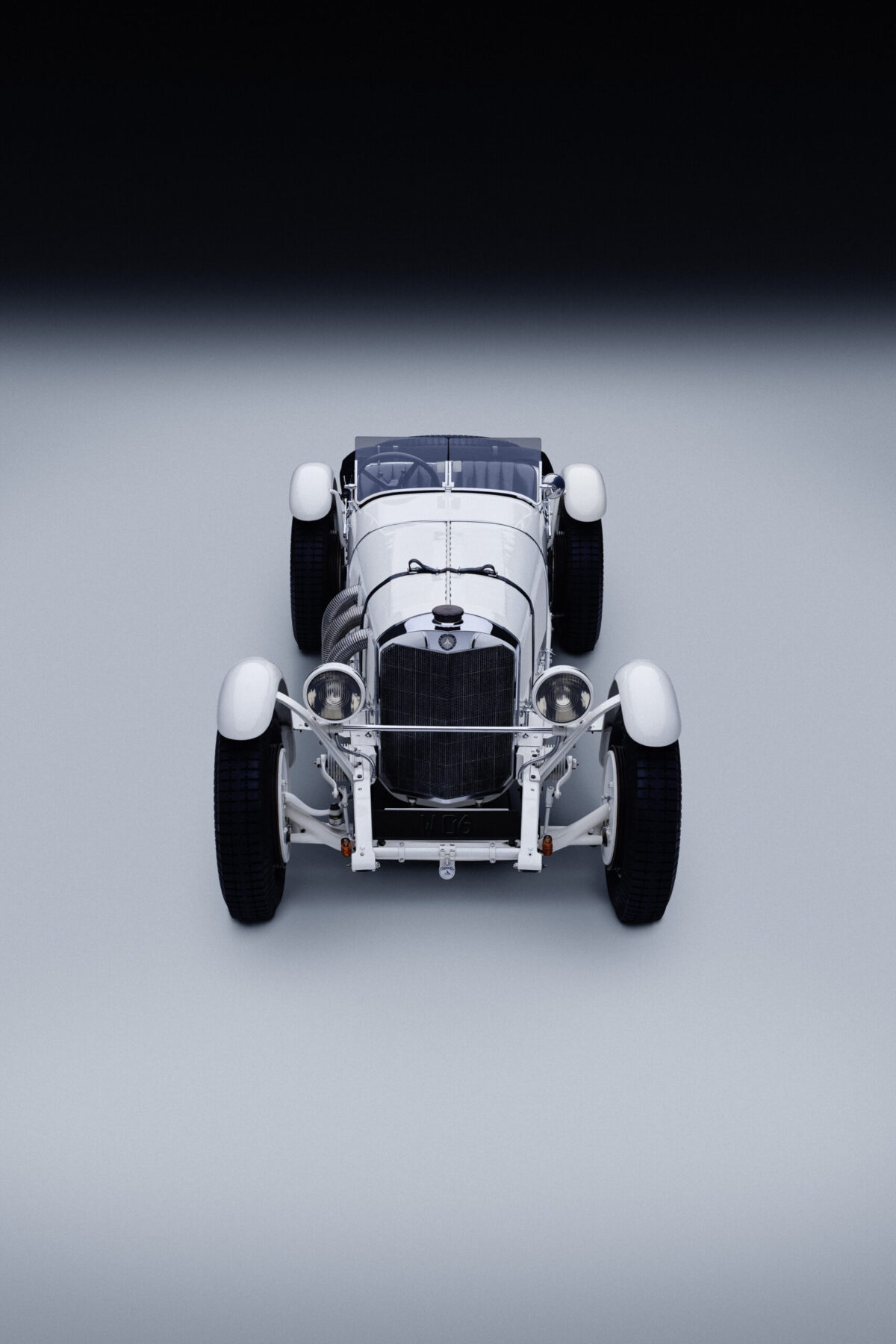
Mercedes-Benz SSK (W 06), production period 1928 to 1932. Vehicle from 1928. Studio shot from the front, taken in 2025.
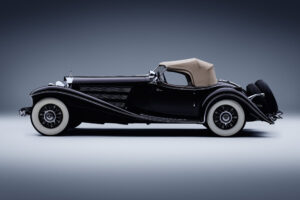
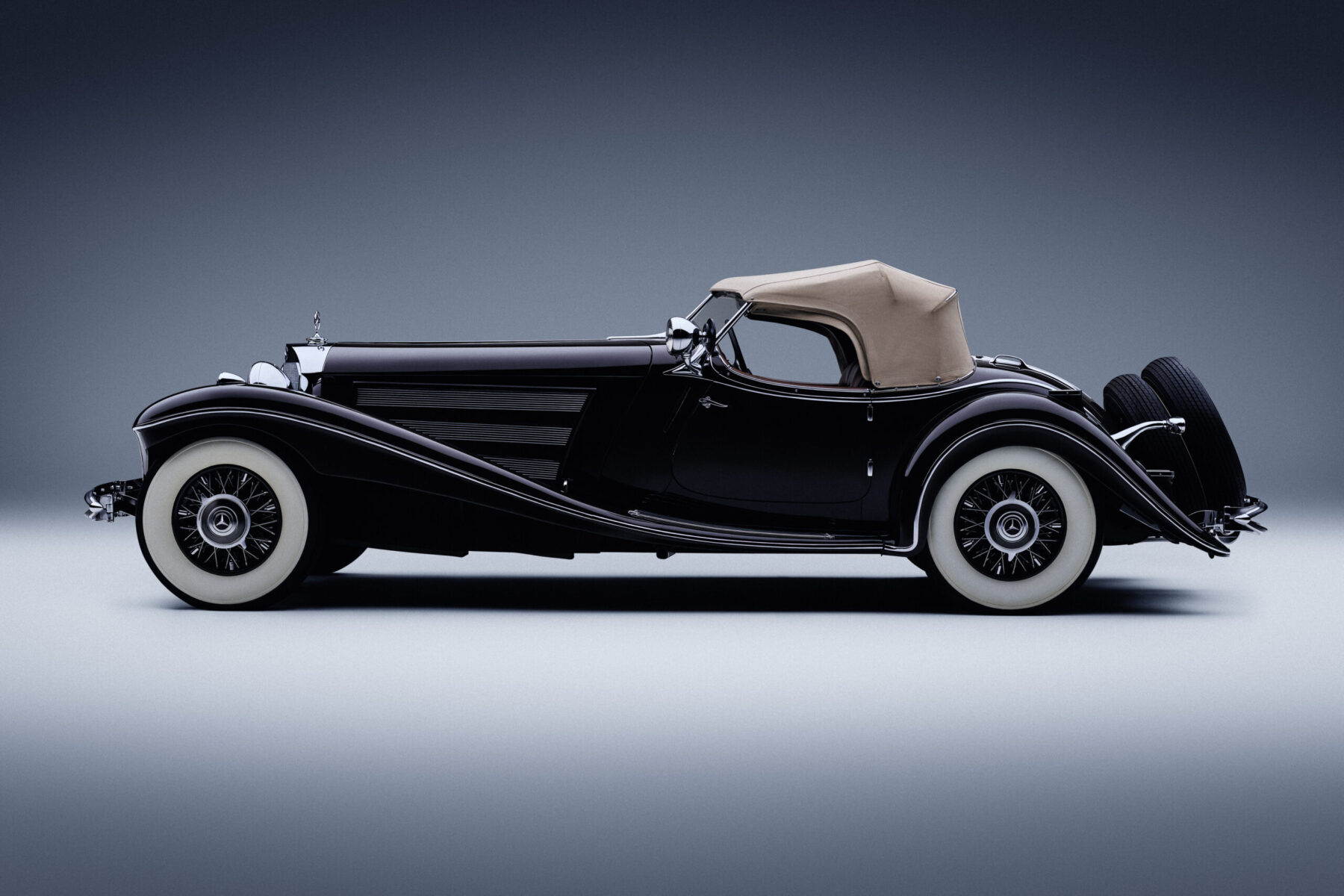
Mercedes-Benz 500 K Special Roadster (W 29), production period 1934 to 1936. Vehicle from 1934. Studio shot from the left with closed hood, taken in 2025.
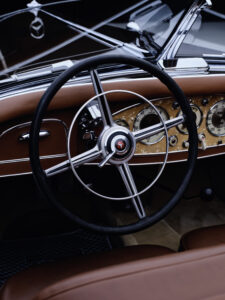
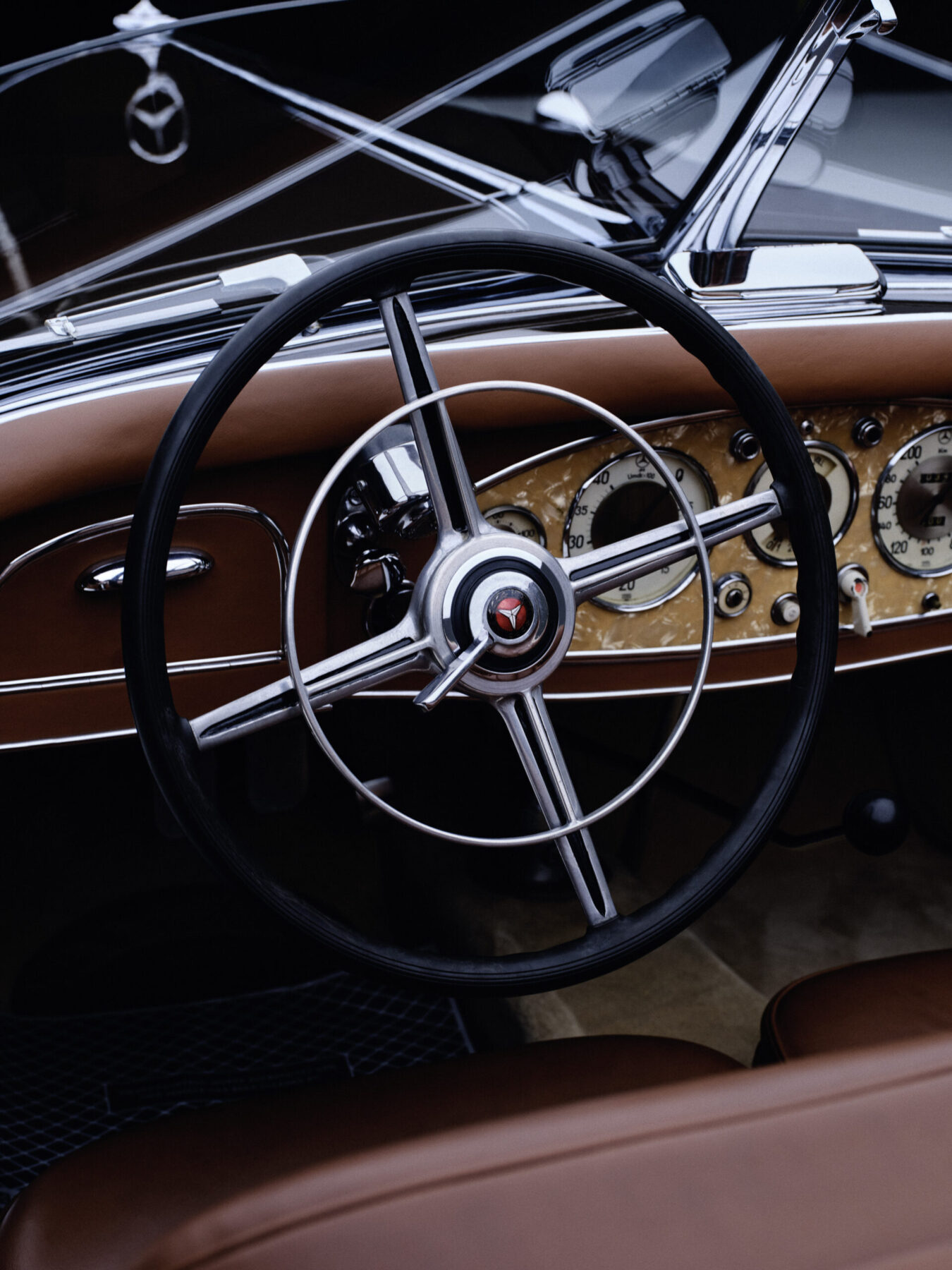
Mercedes-Benz 500 K Special Roadster (W 29), production period 1934 to 1936. Vehicle from 1934. Detailed shot of the cockpit, taken in 2025.
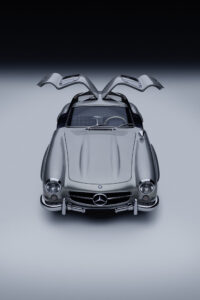
Mercedes-Benz 300 SL “Gullwing” (W 198), production period 1954 to 1957. Vehicle from 1955. Studio shot from the front with gullwing doors open, taken in 2025.
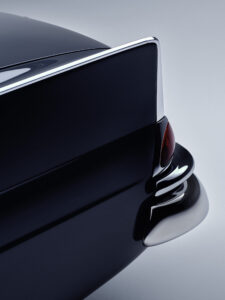
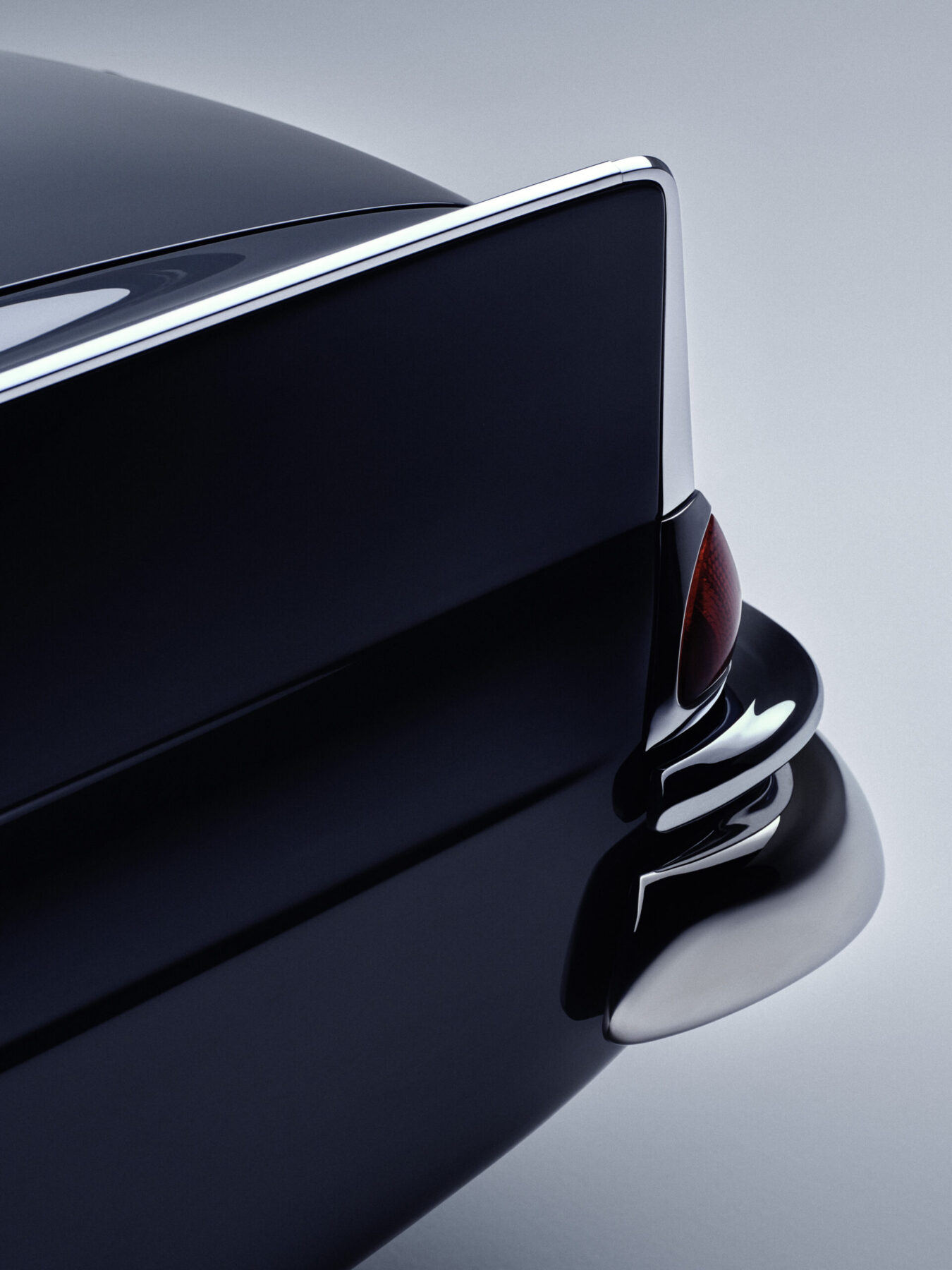
Mercedes-Benz 220 SE “Fintail” saloon from the 111 series, production period 1959 to 1965. Vehicle from 1963. Detailed shot of the left-hand “Fintail”, taken in 2025.
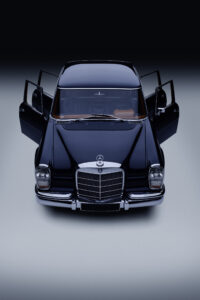
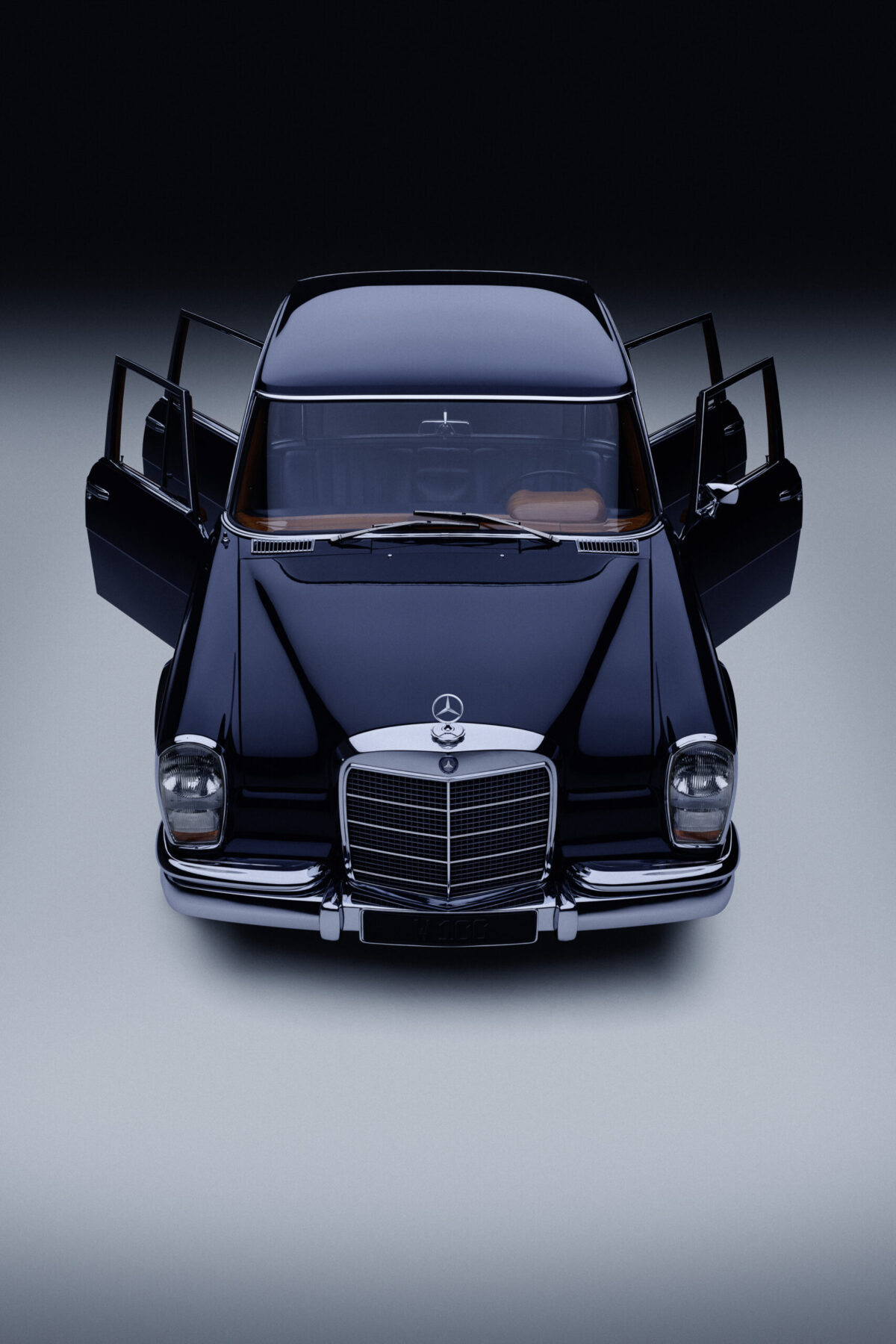
Mercedes-Benz 600 “Grand Mercedes” from the 100 series, produced from 1963 to 1981. Saloon with short wheelbase from 1963. Studio shot from the front with open doors, taken in 2025.
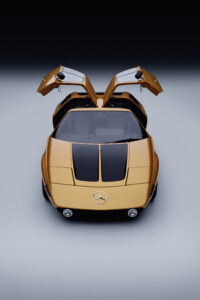
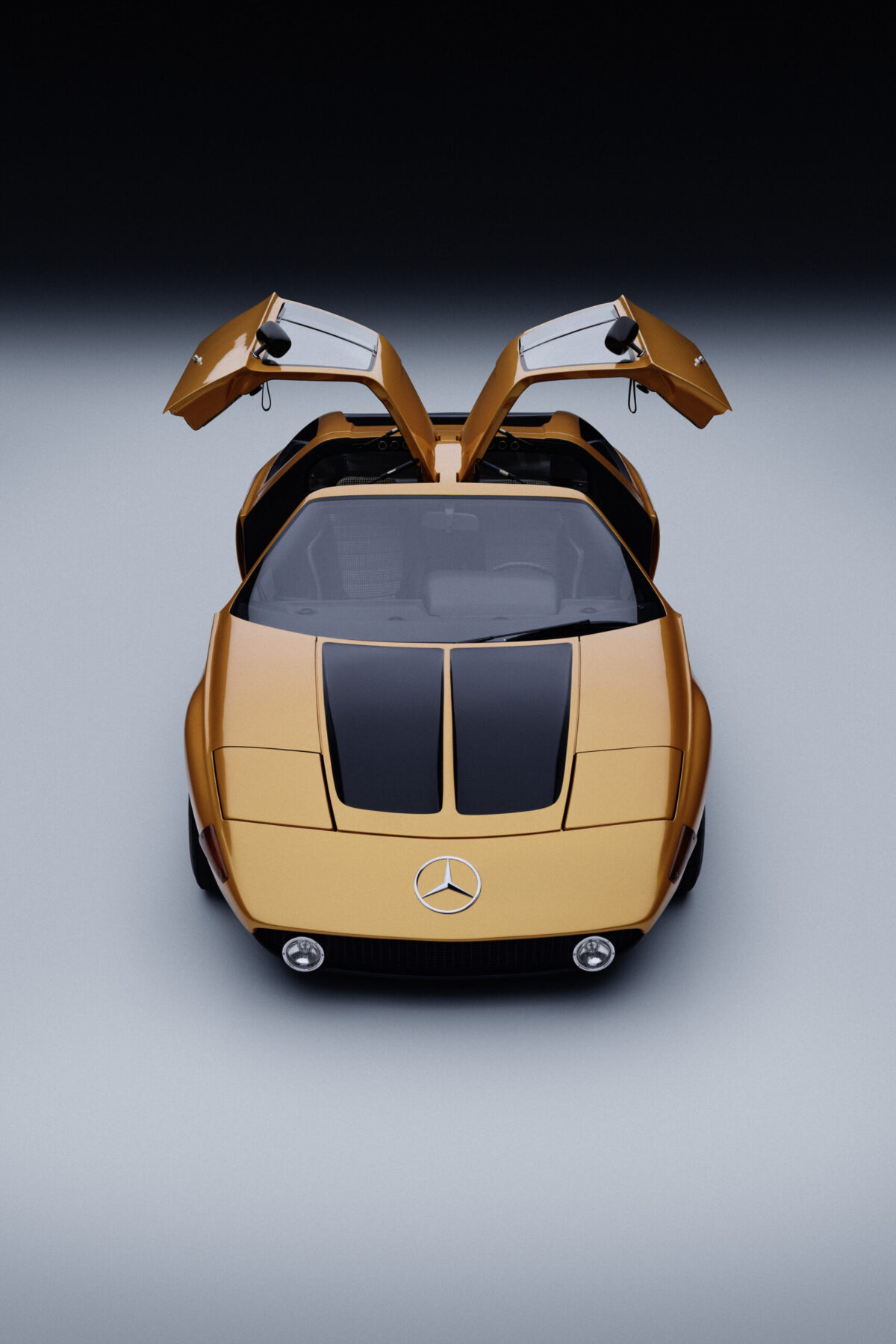
Mercedes-Benz C 111-II. Experimental vehicle from 1970. Studio shot from the front with gullwing doors open, taken in 2025.
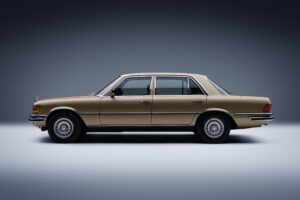
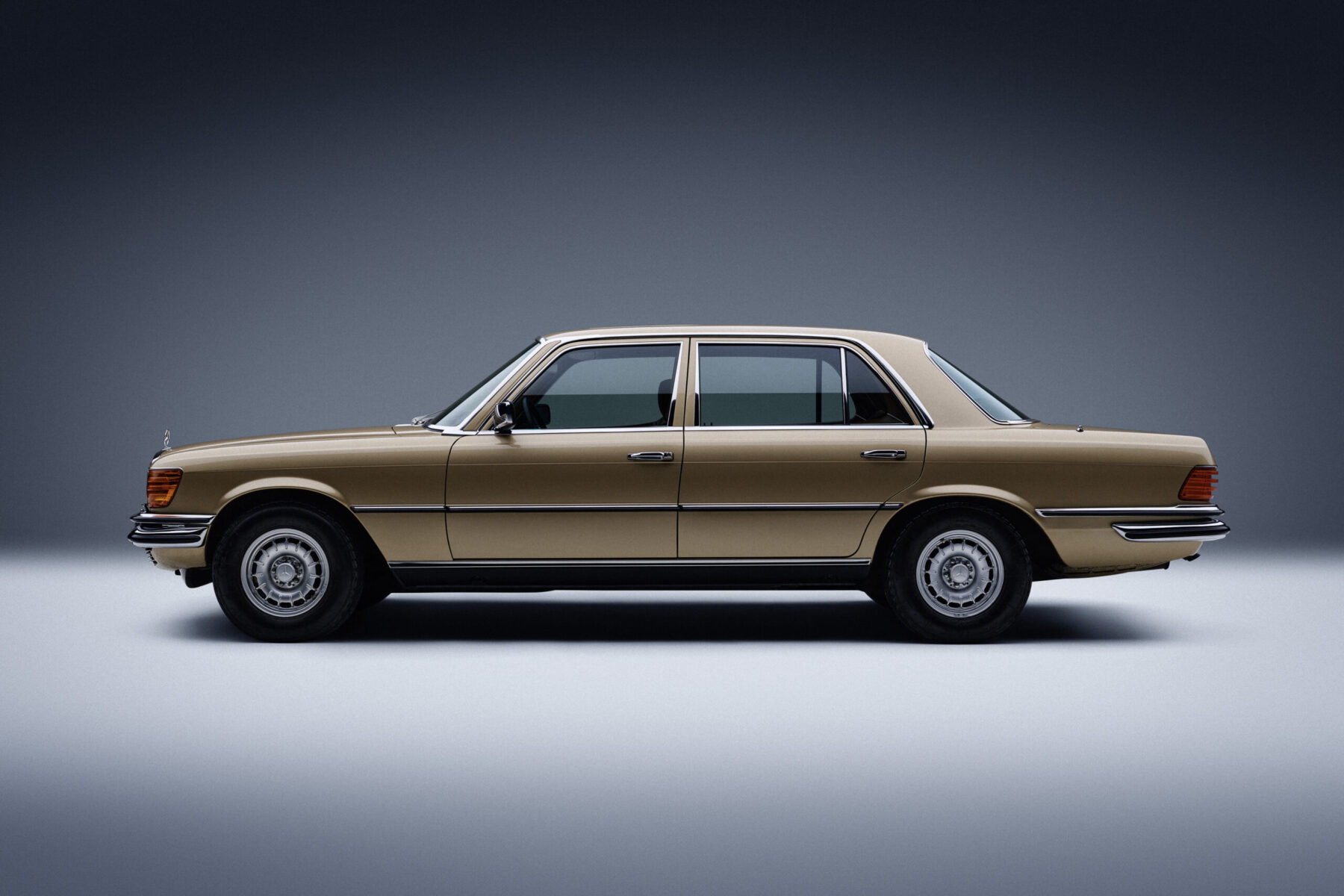
Mercedes-Benz 450 SEL 6.9 from 1980 (116 series, production period 1972 to 1980). Studio shot from the left, taken in 2025.
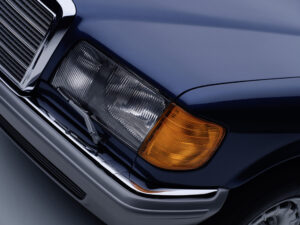
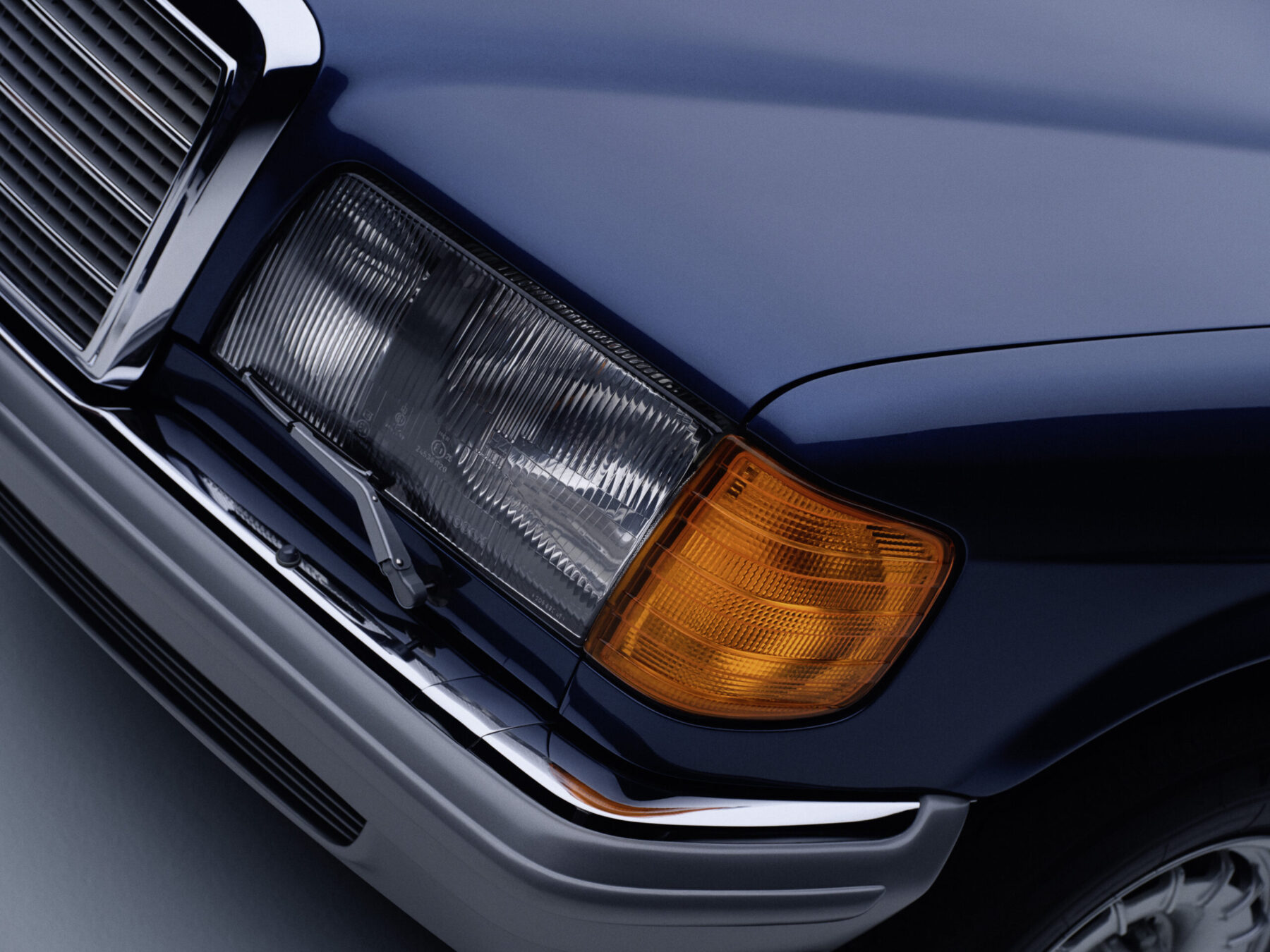
Mercedes-Benz 500 SEL from 1982 (126 series, production period 1979 to 1992). Detailed shot of the left headlight, taken in 2025.
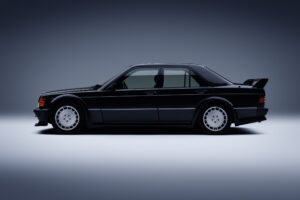
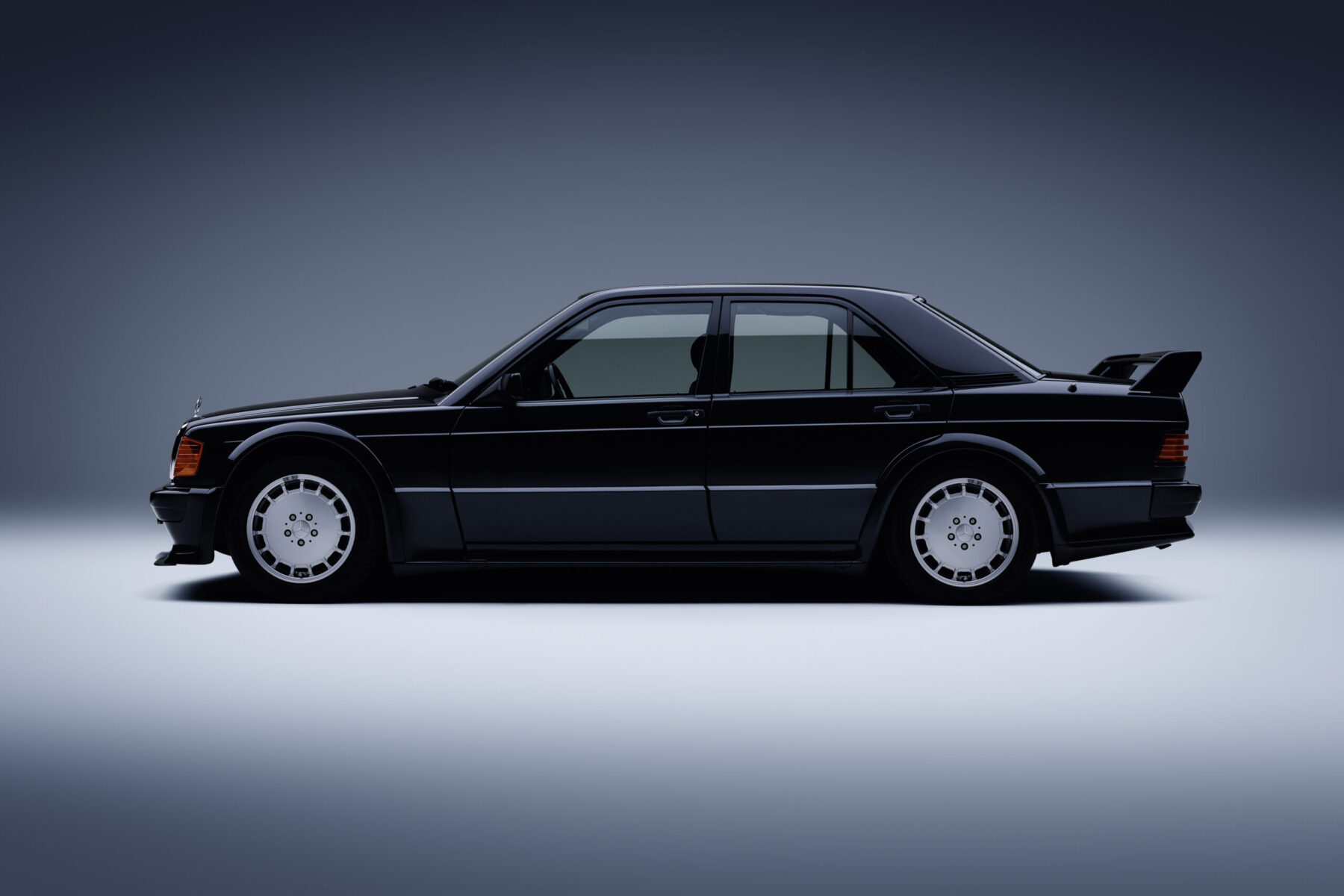
Mercedes-Benz 190 E 2.5-16 Evolution from 1989 (201 series, production period 1982 to 1993). Studio shot from the left, taken in 2025.
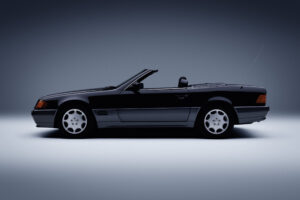
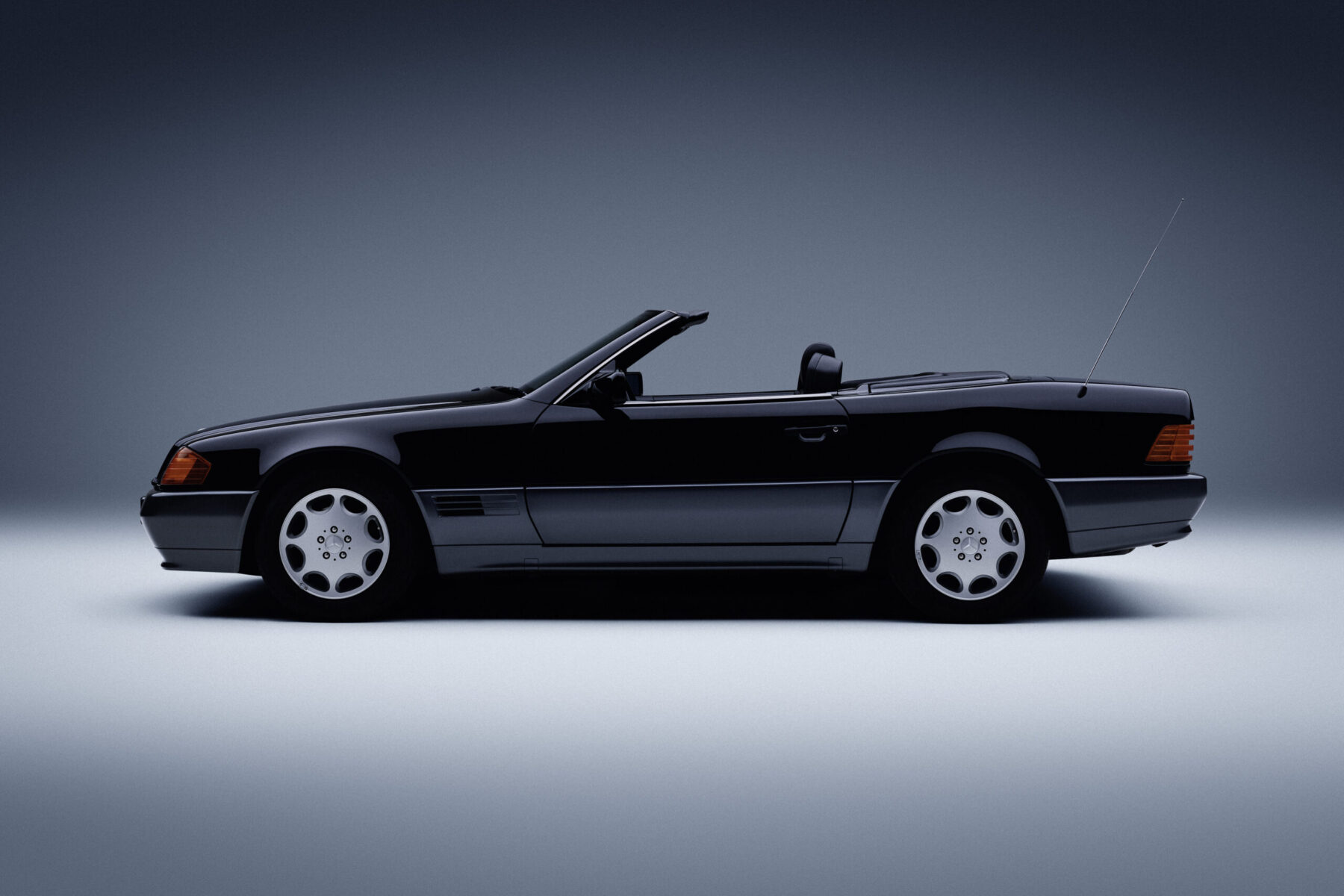
Mercedes-Benz 300 SL from 1992 (129 series, production period 1989 to 2001). Studio shot from the left, taken in 2025.
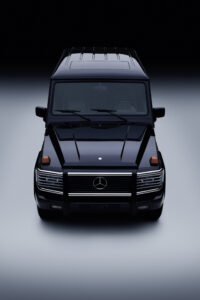
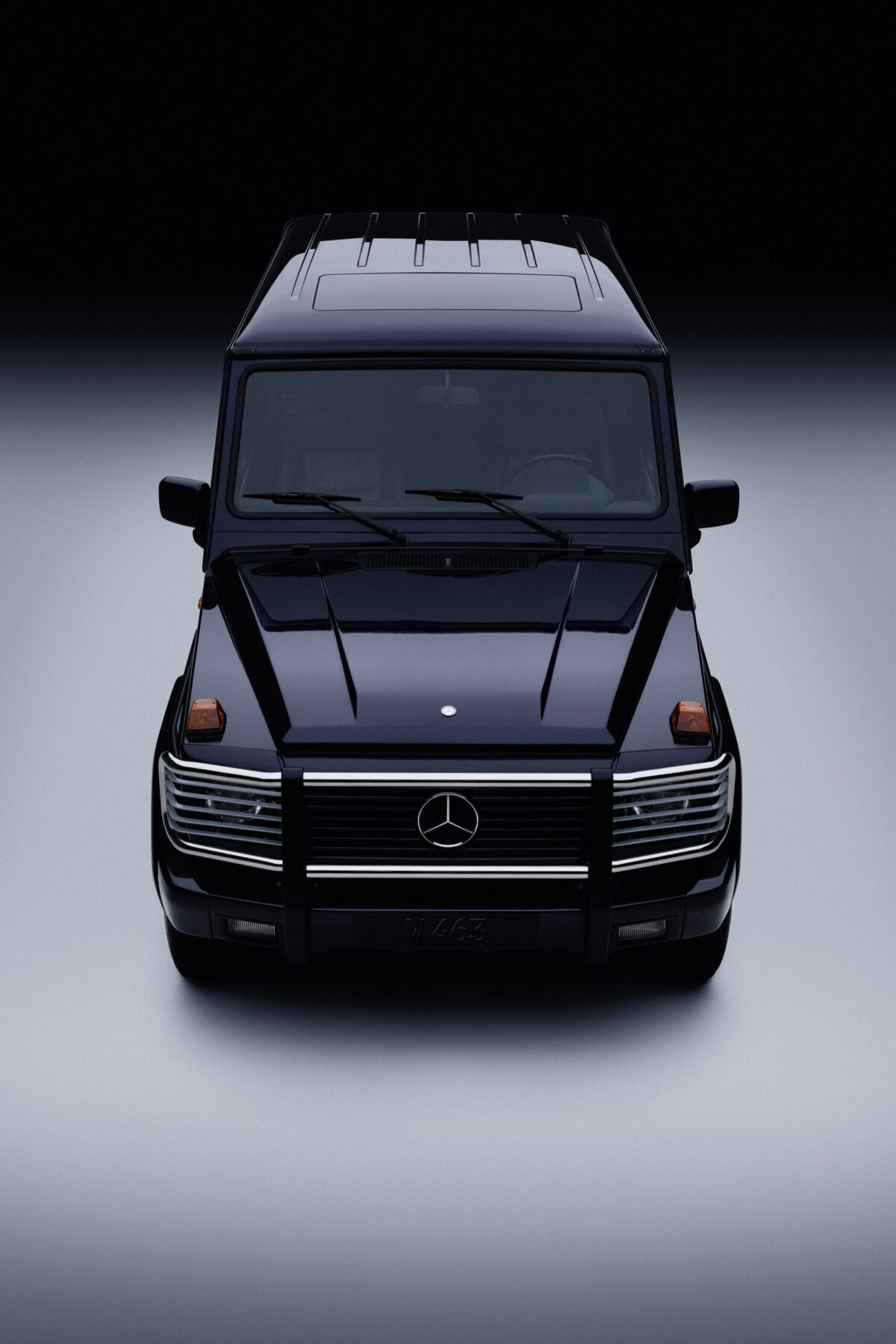
Mercedes-Benz 500 GE V8 from 1993 (463 series). The G-Class is being produced since 1979. Studio shot from the front, taken in 2025.
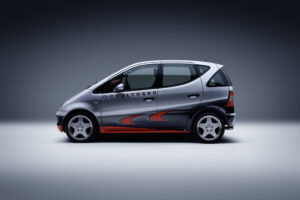
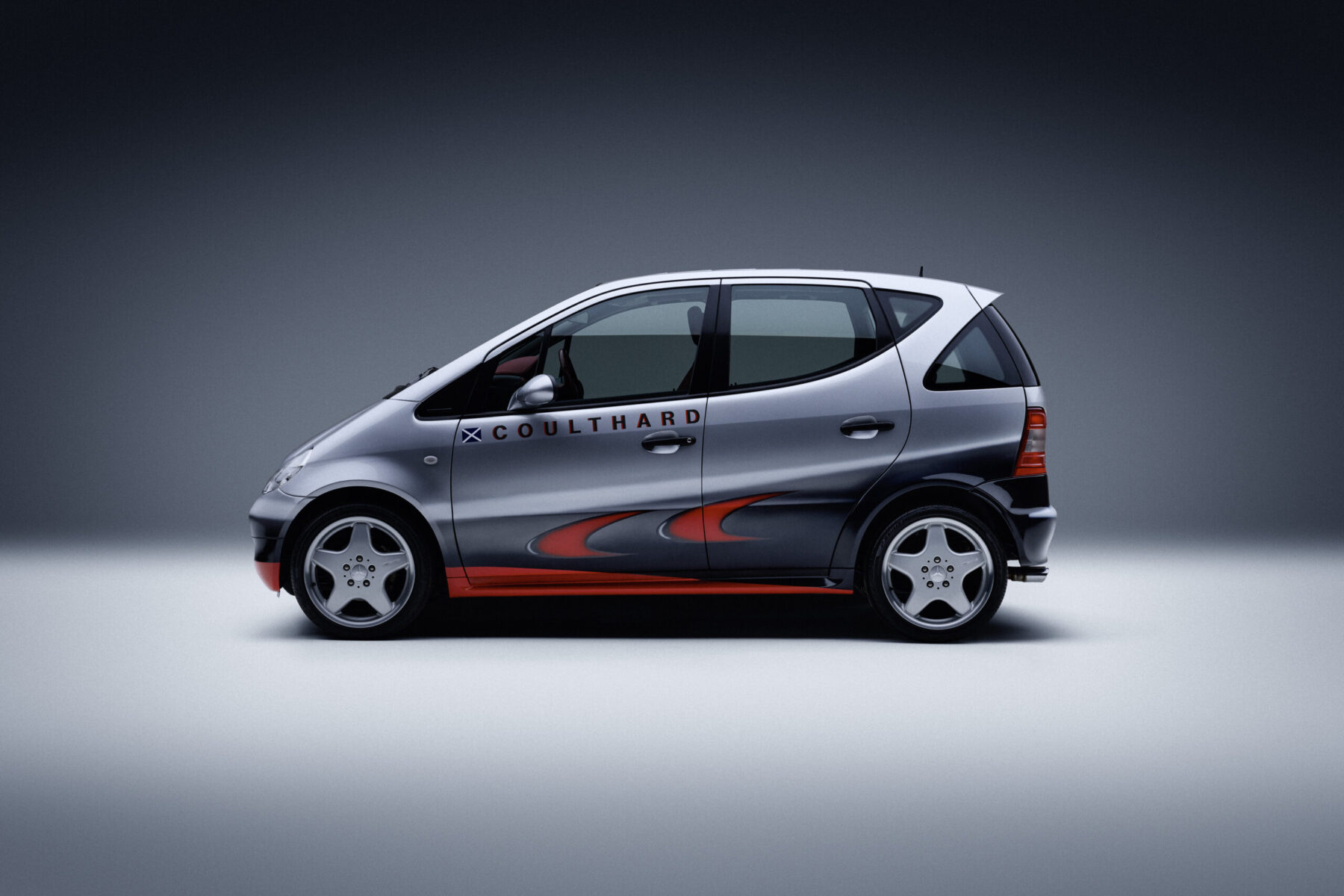
Mercedes-Benz A 160 F1 Edition “Coulthard” from the 168 series. Limited special edition model from 1998. Studio shot from the left, taken in 2025.
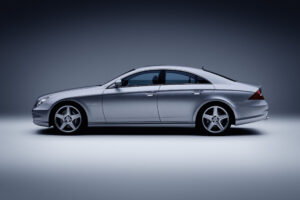
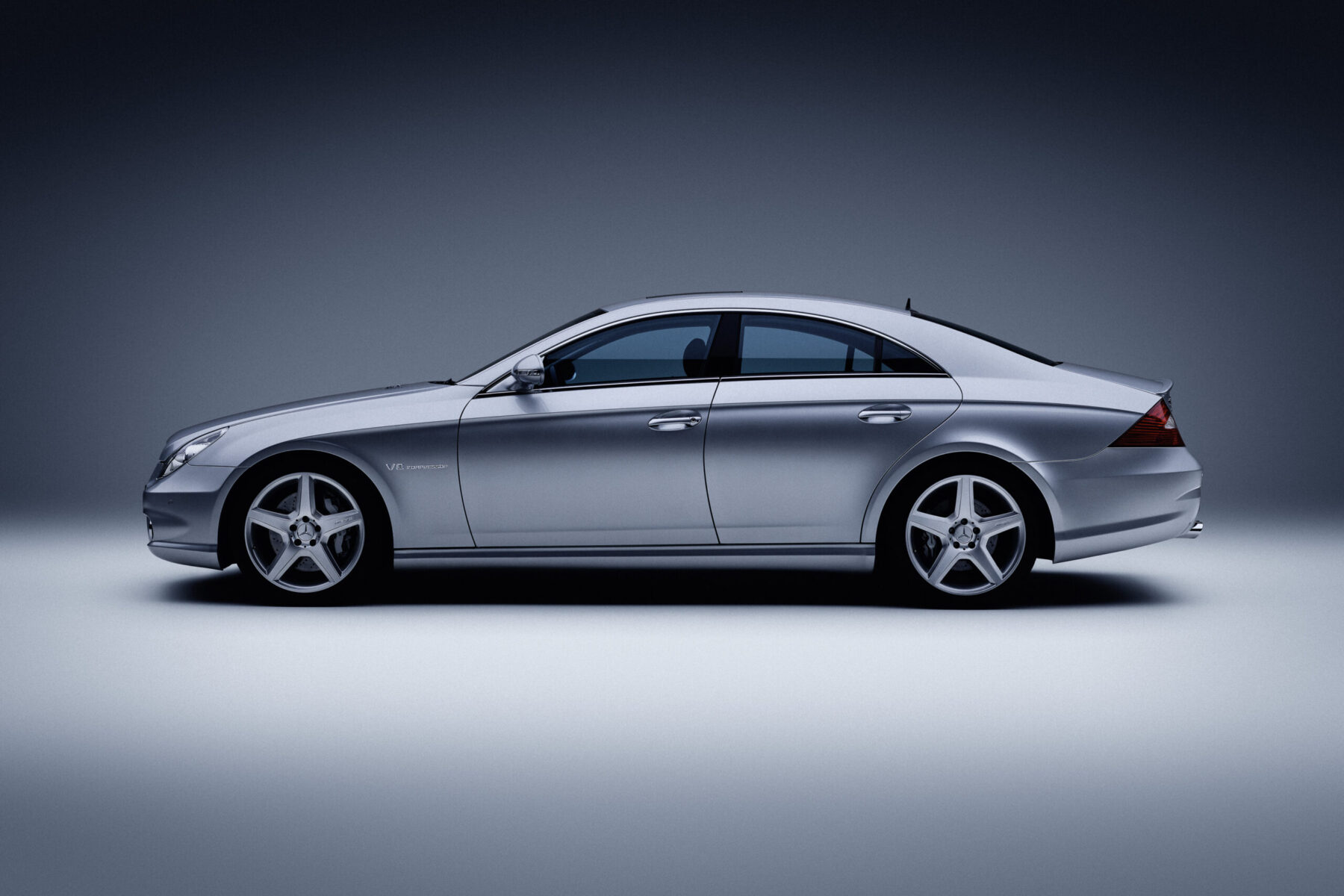
Mercedes-Benz CLS 55 AMG from 2005 (219 series, production period 2004 to 2010). Studio shot from the left, taken in 2025.
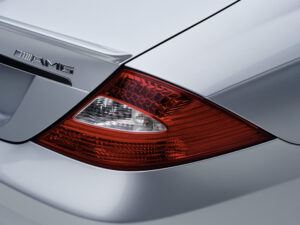
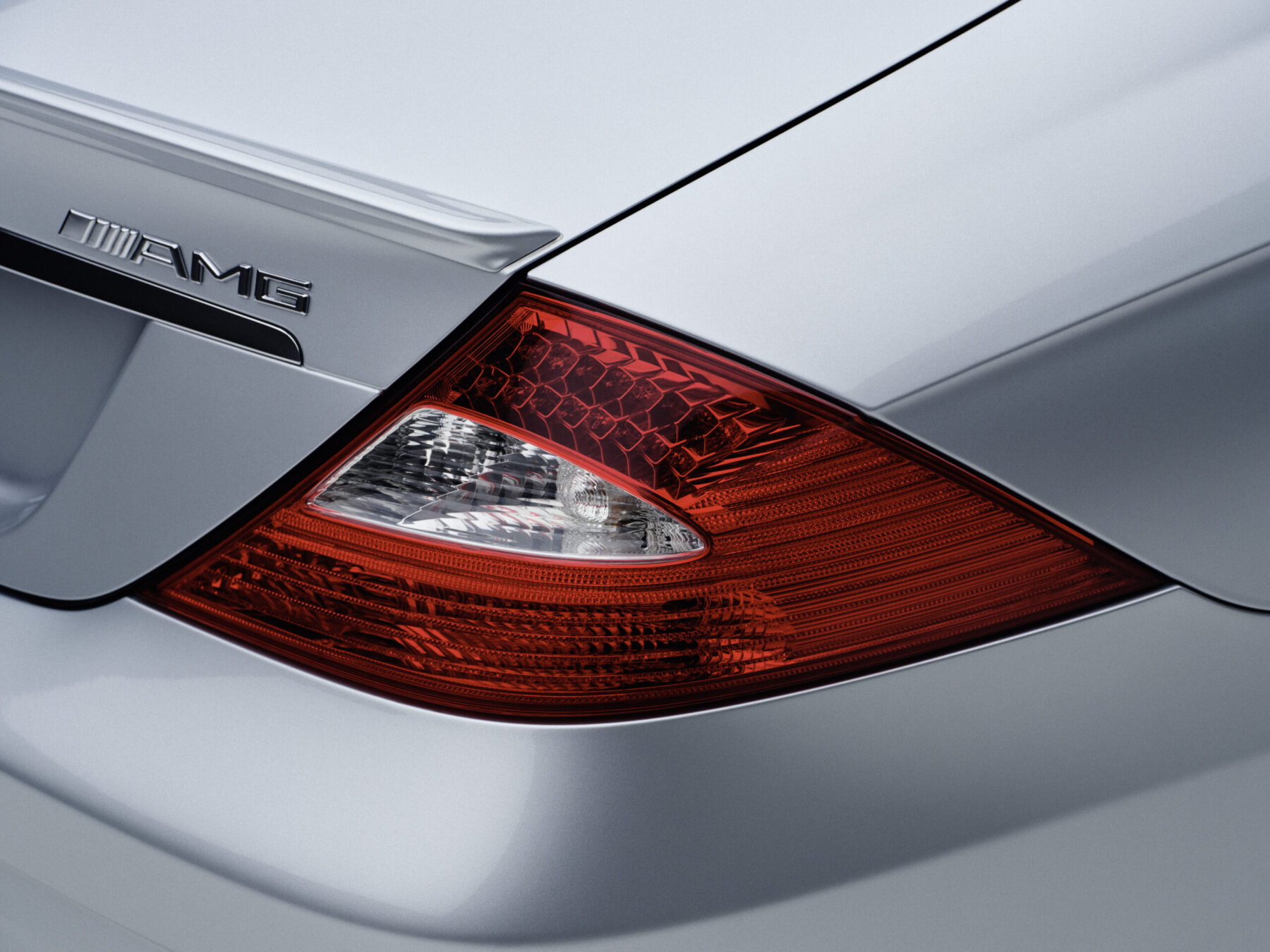
Mercedes-Benz CLS 55 AMG from 2005 (219 series, production period 2004 to 2010. Vehicle from 2005. Detailed shot of the right rear light, taken in 2025.
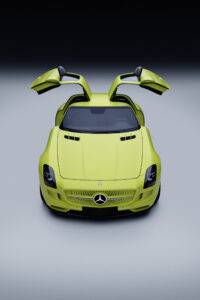
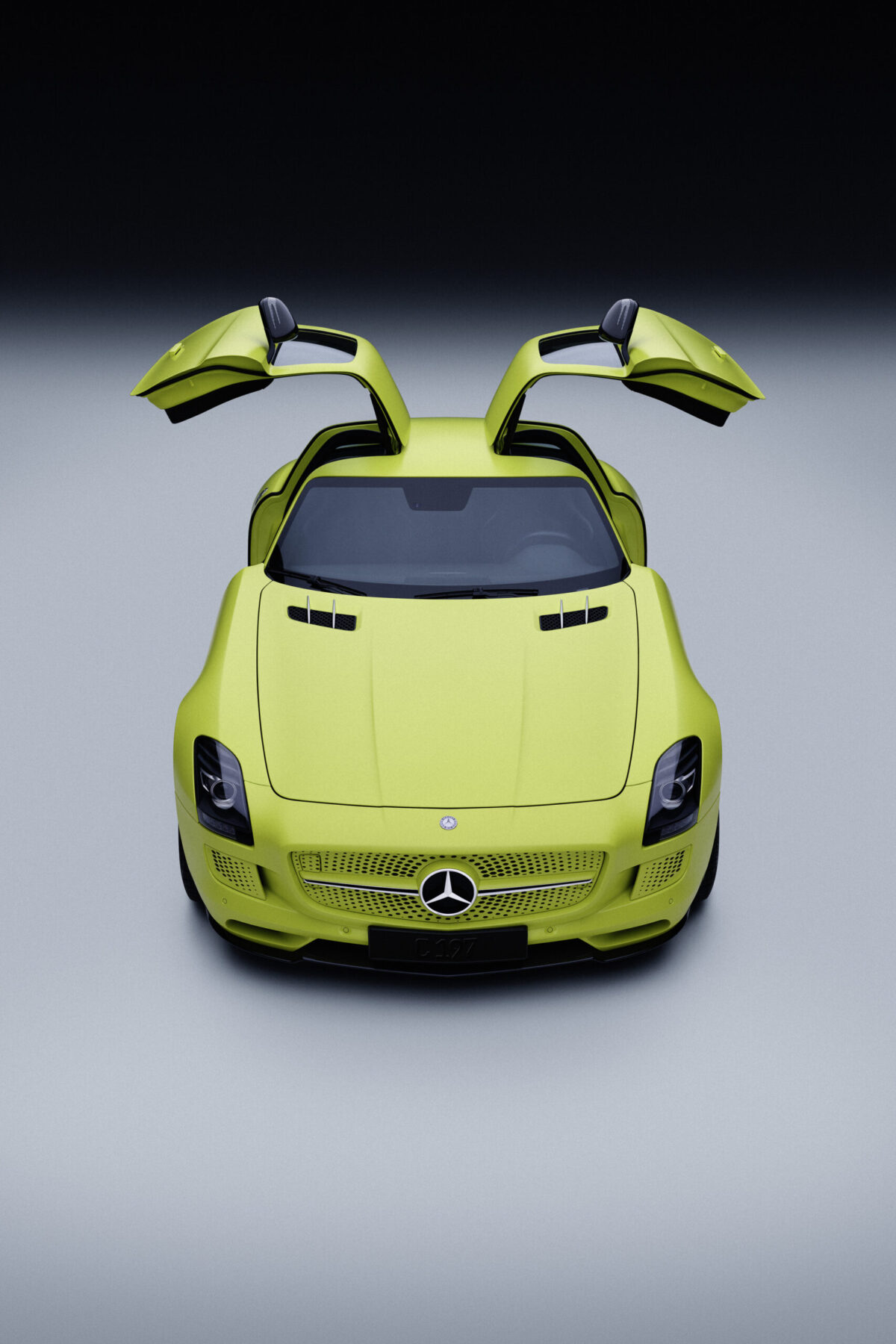
Mercedes-Benz SLS AMG Coupé from 2013 (197 series, production period from 2010 to 2014). Studio shot from the front with gullwing doors open, taken in 2025.
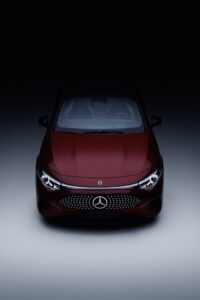
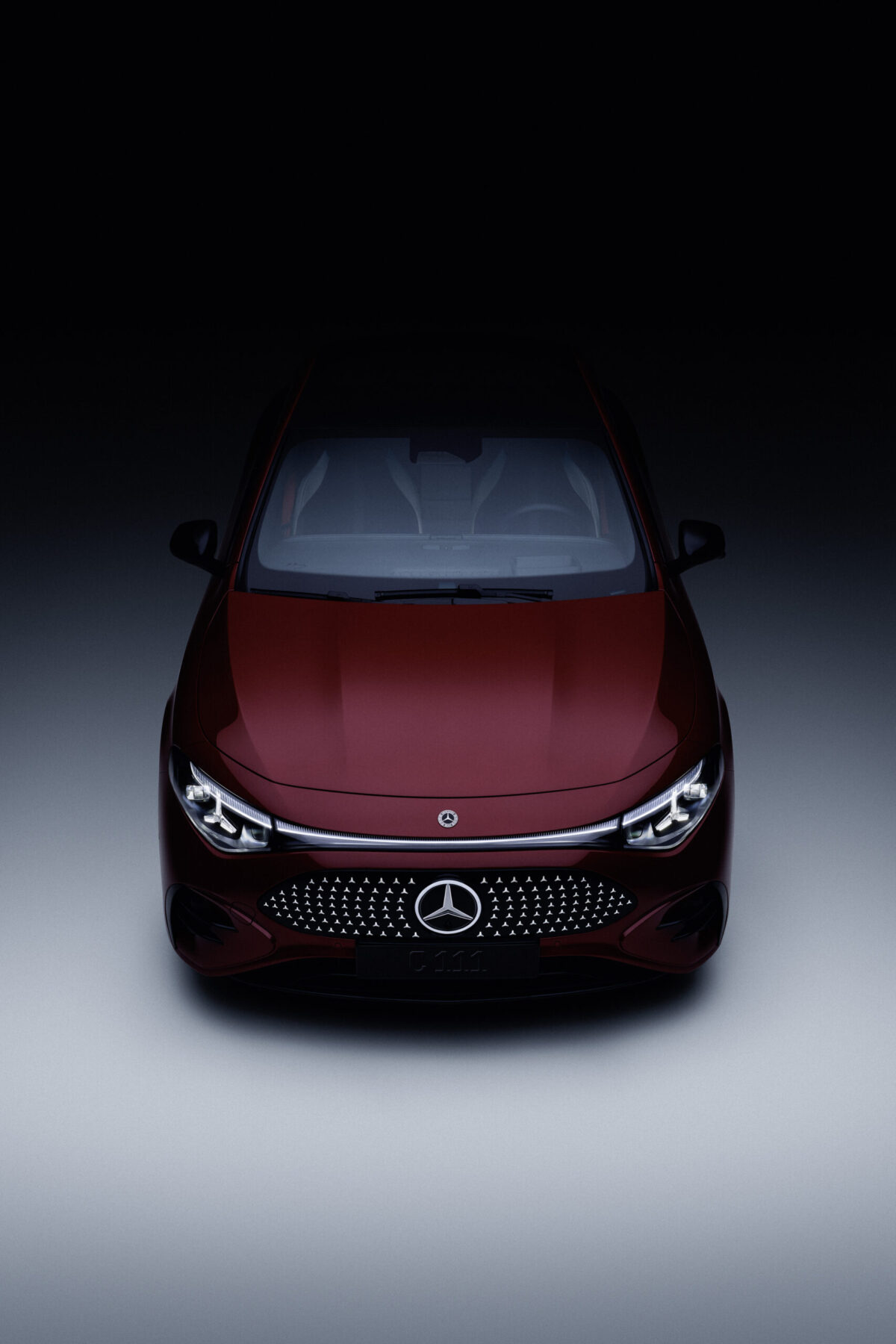
Mercedes-Benz CLA from the 174 series. In production since 2025. Vehicle from 2025. Studio shot from the front, taken in 2025.
Dal brevetto del 1886 alle architetture digitali del 2026, l’automobile non ha mai smesso di muoversi. Ha cambiato forma, linguaggio, funzione. È passata dall’essere un esperimento meccanico a un sistema complesso che riflette il tempo in cui vive. A 140 anni dalla sua nascita, continua a raccontare una storia che non si è ancora fermata.
EMP